On this page
- Best gravel for driveway layers, compared
- Why angular stone beats round stone
- The layers of a gravel driveway
- Choosing the top layer
- Crusher run vs #57 stone
- What goes underneath
- How much gravel a driveway takes
- Soft ground, slopes and cold winters
- Keeping gravel in place
- Questions to ask before you order
- When to add a new top layer
- The best gravel for driveway projects: our pick
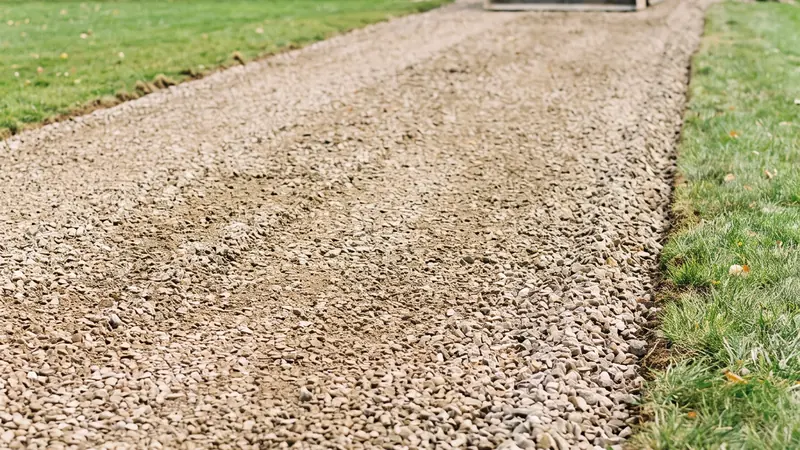
The best gravel for driveway building is angular crushed stone in layers: large stone or crusher run for a 4 to 6 inch base, then #57 stone or crusher run on top. Avoid rounded pea gravel and river rock as the driving surface, because they roll under tires.
Best gravel for driveway layers, compared
Gravel is sold by size number. The number names a gradation, meaning a range of stone sizes, not one exact size. Here are the ones you'll see at a quarry or landscape yard.
| Gravel | Size | Where it goes | Notes |
|---|---|---|---|
| #57 stone | About ¾ to 1 in | Top or middle layer | Angular, drains well, easy to find |
| Crusher run (#411 and similar) | ¾ in stone mixed with fines | Base or top layer | Packs almost like concrete; can get dusty or muddy on top |
| #3 or #4 stone | About 1½ to 2½ in | Base layer | Big angular stone that carries the load |
| #8 stone | About ⅜ in | Thin top dressing | Smoother finish; can move under tires |
| Pea gravel | ¼ to ½ in, rounded | Not recommended on its own | Rolls like ball bearings under tires |
| River rock | 1 in and up, rounded | Borders and drainage only | Too smooth to lock together |
Sizes are typical ranges from suppliers such as Hello Gravel and The Brickyard. Quarries publish their own charts, so check yours before ordering.
Why angular stone beats round stone
This is the single most important choice. Crushed stone has sharp, fractured faces, so the pieces lock together when they're compacted. That's what keeps a driveway from rutting.
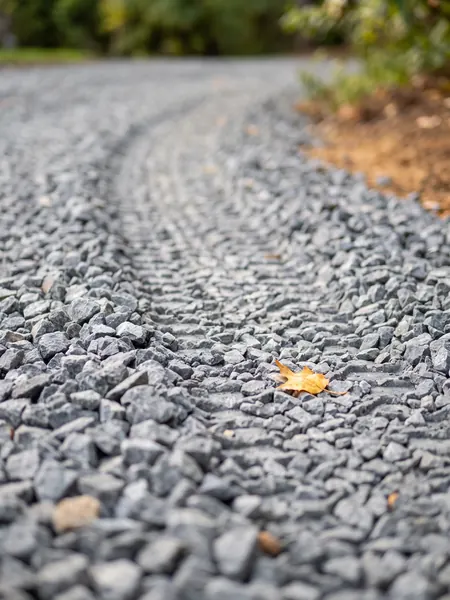
Round stone does the opposite. Pea gravel and river rock act like ball bearings under tires. They scatter to the edges, leave bare patches, and never firm up, however much you roll them.
If you love the look of pea gravel, keep it for paths and patios. Or lay it in a plastic stabilizer grid, which holds it in cells so tires can't push it around.
The layers of a gravel driveway
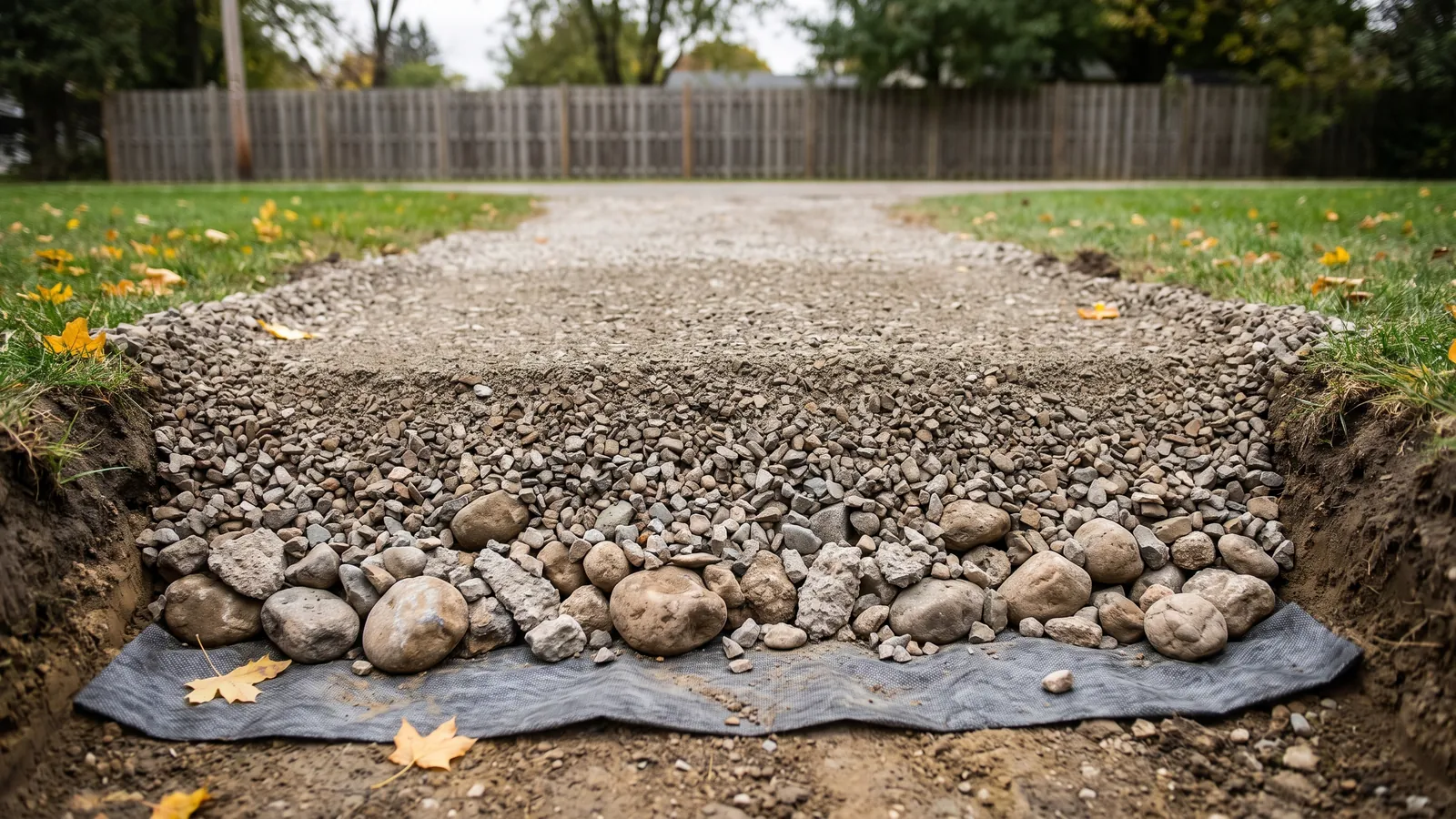
A driveway that lasts is built in layers, coarse at the bottom and finer on top. Suppliers describe two common builds.
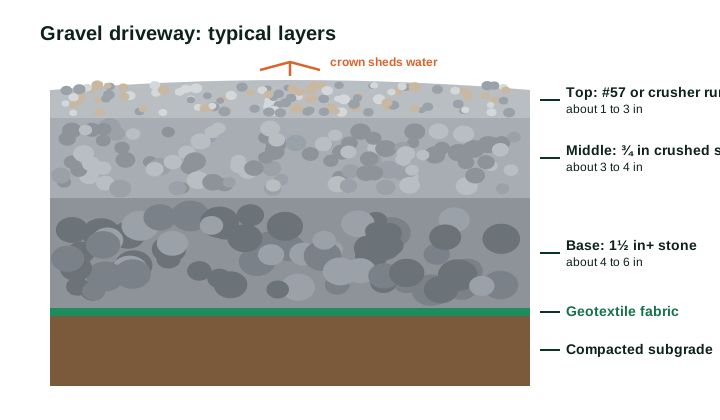
- Two layers, 6 to 8 inches total. The Brickyard recommends 4 to 6 inches of compacted crusher run for the base, topped with a 2 to 3 inch finish layer of #57 stone. On weak clay, they go to 10 to 12 inches total.
- Three layers. Hello Gravel describes a 4 to 6 inch base of 1½ inch stone or larger, a 3 to 4 inch middle layer of ¾ inch crushed stone, and a 1 to 2 inch top layer.
Both agree on the principle: the heaviest, largest stone carries the load at the bottom, and the finish layer only needs to be thick enough to drive on.
How many tons do you need?
Enter the driveway size and each layer's depth to get tons of base and top stone, fabric and truckloads.
Use the gravel driveway calculatorChoosing the top layer
For most homes, the best gravel for driveway surfaces is #57 stone or crusher run. They make different trade-offs.
#57 stone drains freely and stays clean, because it has no fine particles. It can feel a little loose and will shift at the turnaround where cars swing.
Crusher run packs into a hard, smooth surface because its fines fill the gaps. That same dust can turn to mud in wet spells or blow around in dry ones. Some homeowners use crusher run for the base and #57 on top to get both.
Color matters less than people think, but local stone is usually cheapest. Limestone, granite and trap rock all work if they're crushed and angular.
Crusher run vs #57 stone
These two cover most residential driveways, so it's worth comparing them directly.
| Crusher run | #57 stone | |
|---|---|---|
| What it is | ¾ in stone plus stone dust | Washed stone, roughly ¾ to 1 in |
| Surface | Packs hard and smooth | Stays loose, a little crunchy |
| Drainage | Slower; fines hold water | Fast; water runs straight through |
| Dust and mud | Can be dusty in drought, muddy in wet spells | Very little |
| Best job | Base layer, or a firm top on flat drives | Top layer, or a clean, well-drained base |
The Brickyard's layered approach combines them: a compacted base of crusher run or #411, finished with 2 to 3 inches of #57 stone or crushed limestone. You get a solid base that doesn't shift and a top that drains.
TRUEGRID describes #411 as crushed #57 stone combined with rock dust, which is why it behaves so much like crusher run.
What goes underneath
Gravel sinks into soft soil. The fix is a geotextile fabric between the soil and the base. Penn State's Center for Dirt and Gravel Road Studies explains that geotextile keeps base gravel from pushing into the subgrade, while still letting water pass through.
Before any stone goes down, strip the topsoil and compact what's left. Organic soil compresses for years, and the driveway sinks with it.
Shape the surface with a slight crown or cross-slope so rain runs off rather than sitting in the stone. Standing water is what turns a gravel drive into potholes.
How much gravel a driveway takes
Driveways use more stone than most people expect. Take a common single-car drive, 12 feet wide and 100 feet long: 1,200 square feet.
| Layer | Depth | Cubic yards | Tons (at 1.4 t/yd³) |
|---|---|---|---|
| Base | 4 in | 14.8 | 20.7 |
| Base | 6 in | 22.2 | 31.1 |
| Top | 2 in | 7.4 | 10.4 |
| Top | 3 in | 11.1 | 15.6 |
So a 6 inch base plus a 2 inch top on that driveway comes to roughly 30 cubic yards, or about 41 tons of stone. Ask how many tons each truckload holds: it decides how many deliveries you pay for.
Weight per yard changes with the stone and how wet it is. Use your supplier's number when you order, and ask whether they quote compacted or loose volume.
Soft ground, slopes and cold winters
Clay and wet soil. The Brickyard raises total depth to 10 to 12 inches on weak clay subgrades. Add geotextile and fix the drainage before adding any stone.
Steep driveways. Loose #57 rolls downhill under spinning tires. Crusher run's fines help it lock together, and a well-shaped crown or cross-slope keeps water from cutting channels down the middle.
Freezing winters. Water trapped in the base freezes and heaves. Free-draining stone, fabric and a crown that sheds water are what keep a gravel drive level through spring thaw.
Snow plowing. Set the plow blade or shoes slightly high the first winter. A firm crusher run surface loses less stone to the plow than loose #57.
Keeping gravel in place
- Edge it. Timber, steel or concrete edging stops stone from spreading into the lawn.
- Rake the ruts. Pull stone back from the edges into the tire tracks a few times a year.
- Top up, don't rebuild. A thin layer of the same finish stone every few years keeps the surface even.
- Fix water first. If the same spot keeps washing out, deal with the drainage before adding stone.
Questions to ask before you order
Quarries and landscape yards name their stone differently. A few questions avoid the wrong load on your driveway.
- What size number is it? Ask for #57, #411 or crusher run by name, and look at a sample.
- Is it crushed or rounded? For driving surfaces you want crushed, angular stone.
- Washed or unwashed? Washed stone has the fines removed and drains faster; unwashed packs harder.
- Priced by the ton or the yard? Convert both to the same unit before comparing quotes.
- Delivery minimums and truck size? These set how many trips you pay for.
- Can the truck spread it? Many drivers can tailgate-spread stone along the drive, which saves hours of raking.
When to add a new top layer
A well-built gravel driveway rarely needs rebuilding, but the top layer thins as stone gets pushed aside and pressed into the base. When the base starts showing through in the tire tracks, it's time for a fresh top coat.
Rake the existing stone level first and fill potholes separately. Then spread a thin layer of the same stone you used before. Mixing a new, different stone on top of an old one often looks patchy.
The best gravel for driveway projects: our pick
What we'd build
- Base: large crushed stone (#3 or #4) or crusher run, 4 to 6 inches, compacted, over geotextile.
- Top: #57 stone for drainage, or crusher run for a harder surface. 1 to 3 inches.
- Skip: pea gravel and river rock as the driving surface.
Angular stone, built in layers over fabric, is the best gravel for driveway work almost everywhere. The only real decision is the finish: free-draining #57 or hard-packing crusher run.
Sources