On this page
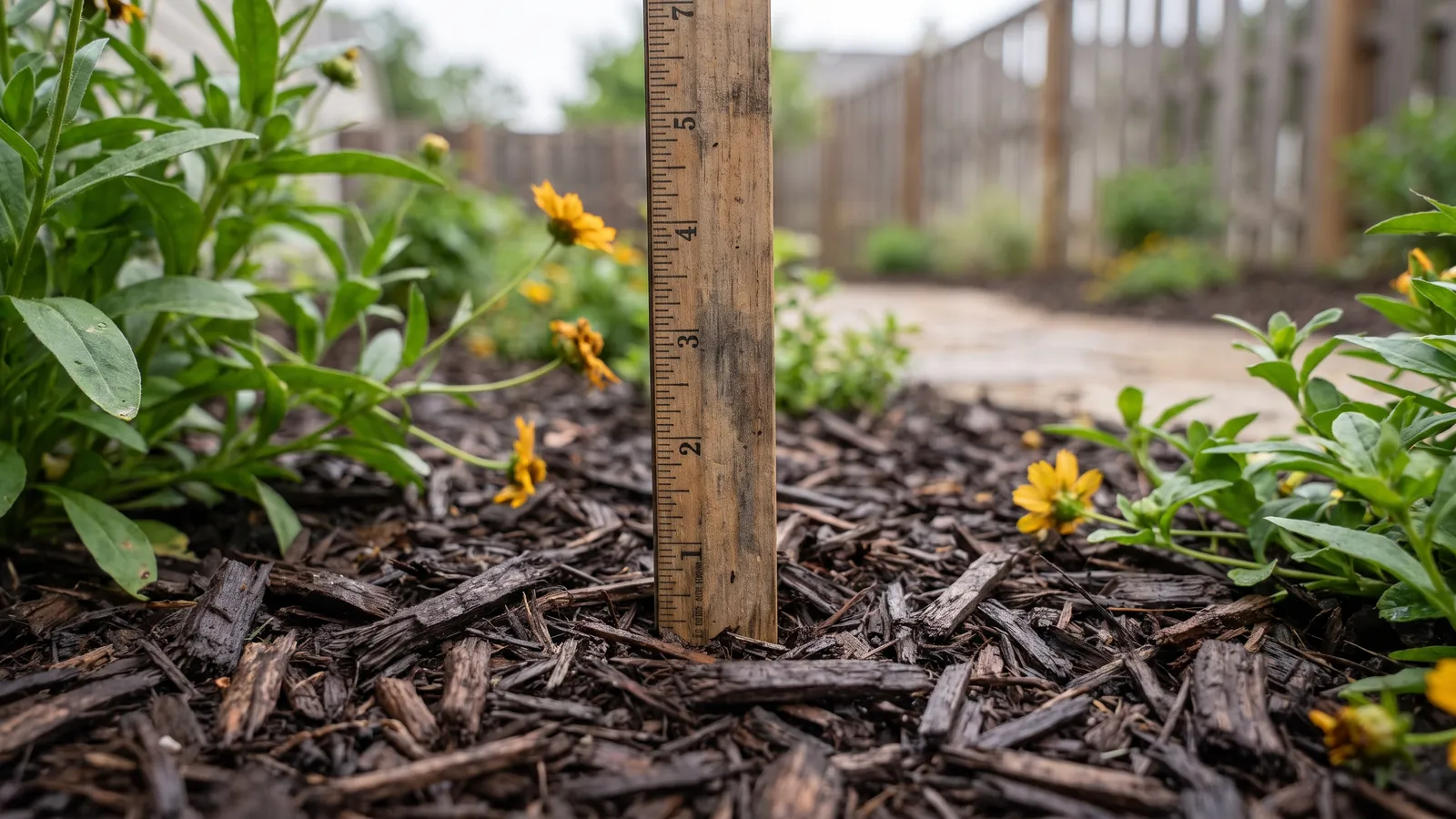
How deep should mulch be? For most beds, 2 to 4 inches. Go to the low end around small plants and trees, the high end in shrub beds and paths. Thinner lets weeds through; thicker can smother roots.
Here's the short version before the details:
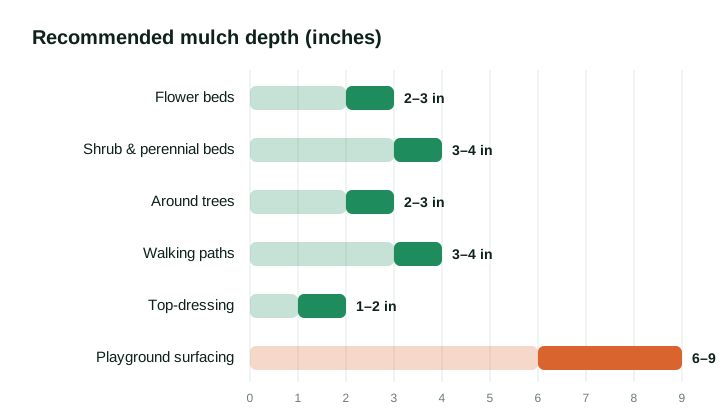
- 2 to 3 inches for flower beds, annuals and around trees.
- 3 to 4 inches for shrub beds and walking paths.
- 1 to 2 inches when you're only topping up an existing bed.
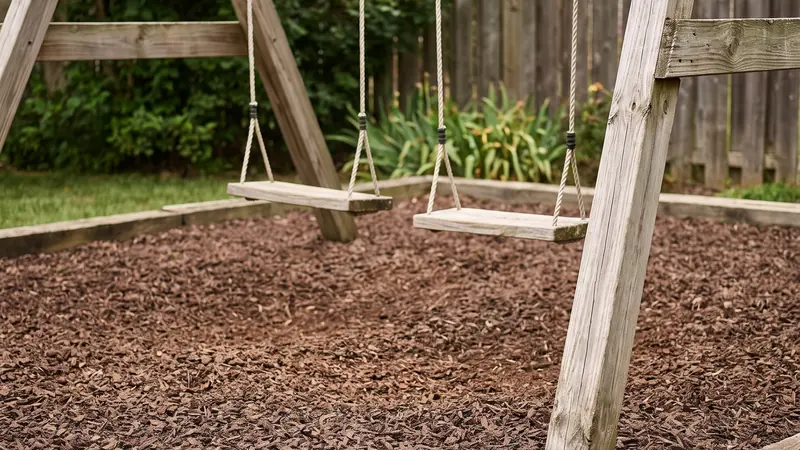
- 6 to 9 inches of engineered wood fiber for playgrounds, which is a different product altogether.
How deep should mulch be for each project?
Match your project to the right depth, and the reason behind it.
| Project | Recommended depth | Why |
|---|---|---|
| Flower beds and annuals | 2 to 3 in | Shallow roots; too much depth can smother small plants |
| Shrub and perennial beds | 3 to 4 in | Standard depth for weed suppression and moisture retention |
| Around tree trunks | 2 to 3 in, pulled back from bark | Mulch touching the trunk traps moisture and invites rot |
| Mulched walking paths | 3 to 4 in | Needs enough depth to stay firm underfoot |
| Top-dressing an existing bed | 1 to 2 in | You're topping up depth lost to decomposition |
| Playground safety surfacing | 6 to 9 in (engineered wood fiber) | A safety-rated product, different from decorative mulch |
Why depth matters both ways
Less than 2 inches doesn't reliably block sunlight from weed seeds, so you lose most of the weed control mulch is supposed to give you.
More than 4 inches on a planting bed can hold too much moisture against stems and surface roots. That invites rot and can smother the plants you're mulching around. Depth has a ceiling.
Avoid volcano mulching
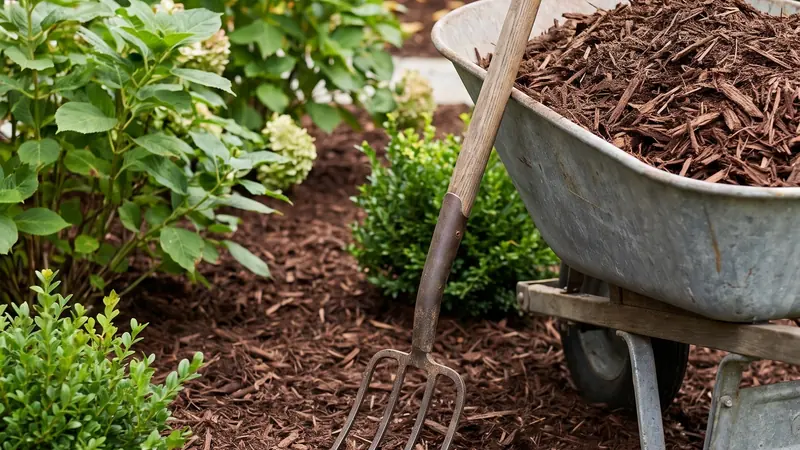
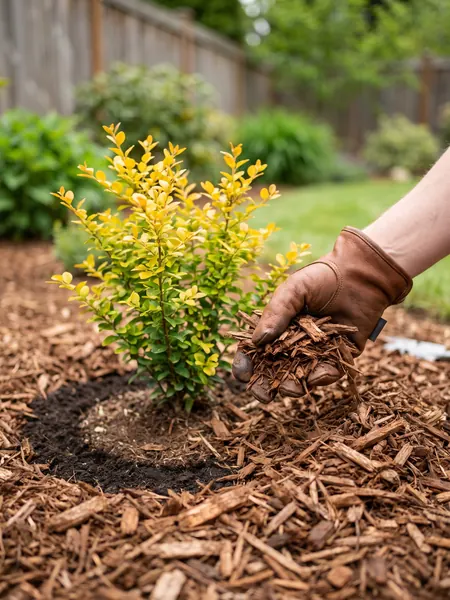
Never pile mulch against a tree trunk. Leave a few inches of bare ground around the bark, then spread mulch out toward the drip line at 2 to 3 inches.
How much mulch will you need?
Once you know the depth, the only variable left is the bed's size. One cubic yard covers about 108 square feet at 3 inches, or 162 square feet at 2 inches.
Get your exact amount
Enter your bed size and depth to get bags, cubic yards and the cheaper way to buy.
Use the mulch calculatorStill choosing a material?
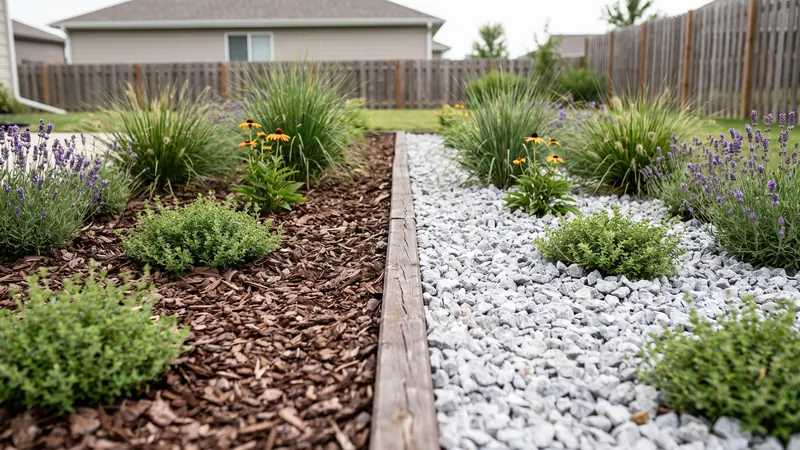
If you're weighing wood mulch against stone, depth works differently: rock goes on thinner, and it never needs topping up.
Wood mulch or landscape rock? Cost, heat and weeds compared.
Read: mulch vs rockWhichever material you choose, knowing how deep should mulch be for each bed is what makes it work.
Frequently asked questions
Does the right depth change with the type of mulch?
Yes, slightly. Fine shredded mulch settles and packs down more than coarse wood chips, so 2 to 3 inches blocks light well. Coarse chips and bark nuggets have more air gaps and usually go on at 3 to 4 inches.
How often do I need to add more mulch?
Organic mulch breaks down and settles, so most beds need a top-up of an inch or two each year rather than a full new layer.
Sources