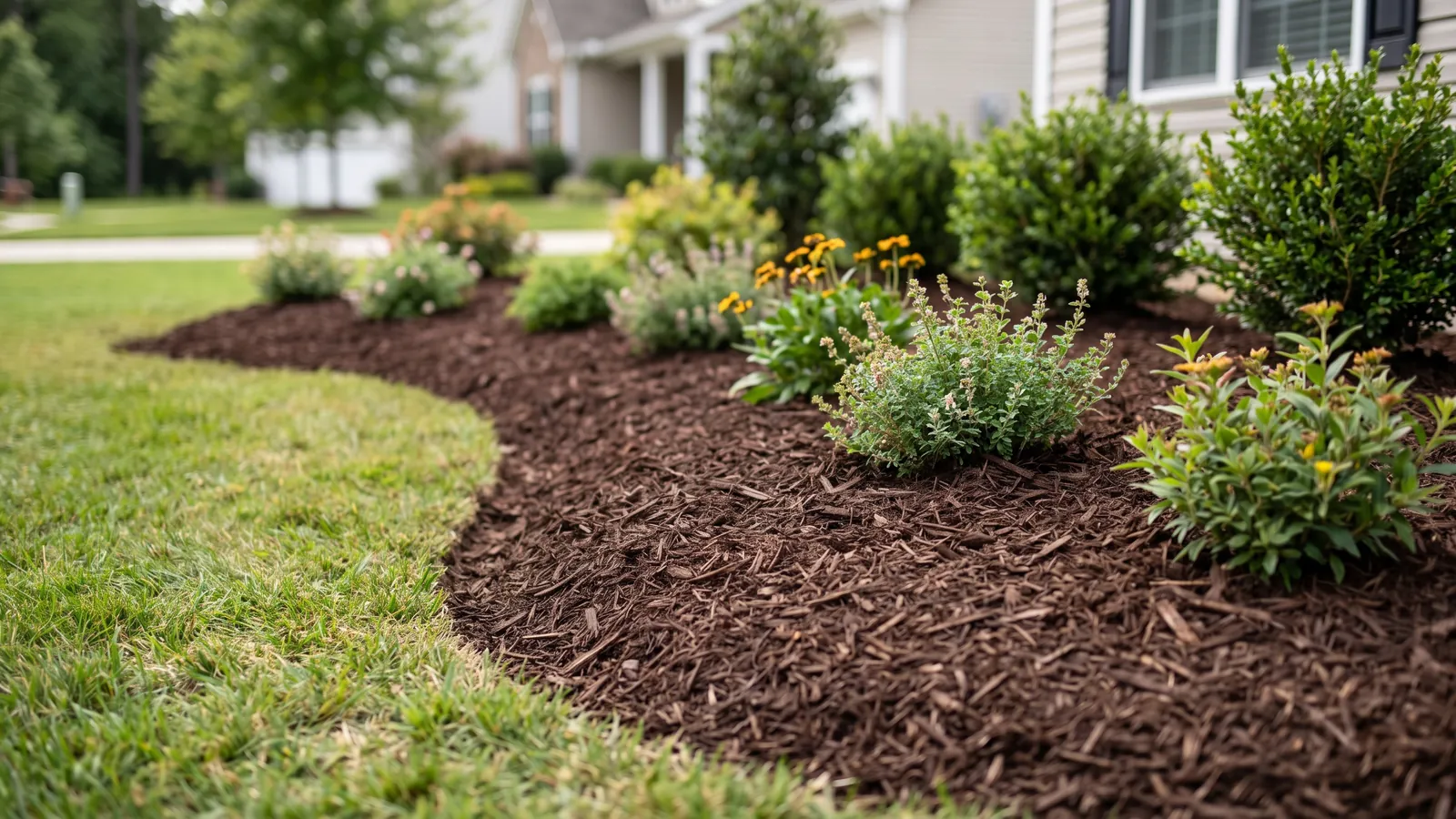
Which of our mulch calculators do you need?
Wood mulch and rubber mulch are different products with different depths and weights, so each has its own calculator. Pick the one that matches the job:
- Landscaping beds, shrubs, tree rings and paths: the mulch calculator, with bag size, an extra for waste and a top-up depth.
- Playgrounds and long-lasting beds: the rubber mulch calculator, with the CPSC depth and an allowance for displacement.
- Measuring a curved bed first: the square footage calculator.
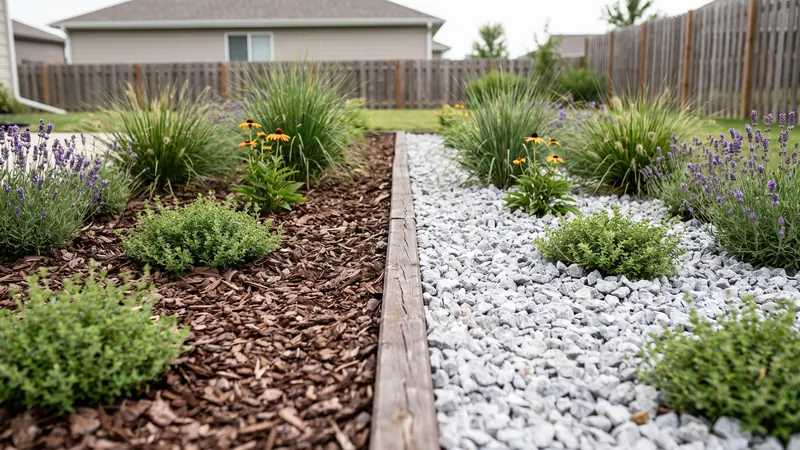
- Choosing stone instead of wood: the landscape rock calculator, and our guide to mulch vs rock.
How mulch calculators work
Measure the length and width of the bed and multiply them to get square feet. Both mulch calculators turn that area into cubic feet at the depth you choose, then into cubic yards and bags, so round the bags up. Only the depth, the bag size and the weight change.
Worked example: a flower bed and a play area
A 10 × 10 ft bed at 3 inches is 25 cubic feet, or 0.93 cubic yards, which is 13 bags of 2 cubic feet. A 20 × 15 ft play area at 6 inches of rubber mulch is 150 cubic feet, or 5.6 cubic yards, which is 188 bags of 0.8 cubic feet.
Mulch types compared: wood, rock and rubber
Utah State University Extension splits mulch into organic (wood chips, bark, pine needles) and inorganic (rock, gravel, lava rock, recycled glass). Weights per cubic yard come from The Calculator Site for bark and wood chips, Stone Center for crushed stone and GravelShop for rubber.
| Mulch | Type | Typical depth | Weight per cubic yard |
|---|---|---|---|
| Bark mulch | Organic | 3–4 in (Utah State, Penn State) | 506 lb |
| Wood chips | Organic | 3–4 in | 674 lb |
| Rock and gravel | Inorganic | 2–3 in (Utah State) | 1.35–1.7 tons for crushed stone |
| Rubber mulch | Inorganic | 1.5–2 in in beds, 6 in on playgrounds | about 2,410 lb |
Organic mulch breaks down and feeds the soil but needs replacing. Clemson Extension suggests every year or every other year. Rubber and rock do not decompose, and neither adds anything to the soil.
Mulch depth by use
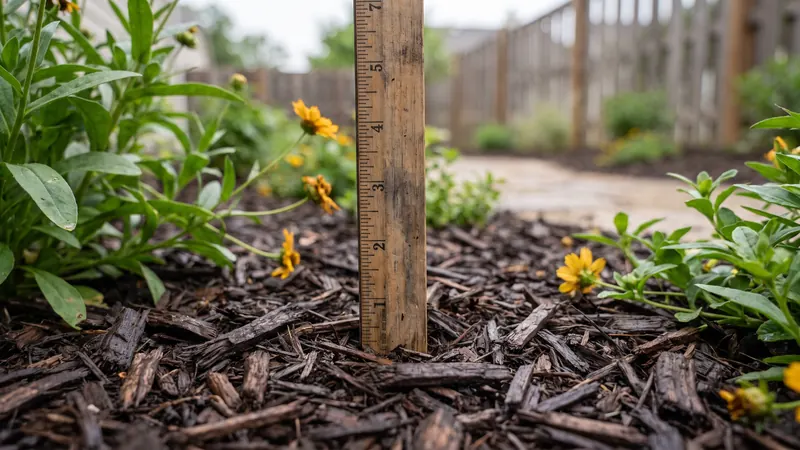
Depth drives the order more than anything else. Too thin lets weeds through, and too thick holds water against the stems and roots of plants.
| Use | Depth | Source |
|---|---|---|
| Organic mulch in beds | 3–4 in | Utah State Extension |
| Rock or gravel mulch | 2–3 in | Utah State Extension |
| Ornamental beds | 3–4 in | Penn State Extension |
| Around trees | 2–4 in, 3–4 in off the trunk | Penn State Extension |
| Fine mulch / coarse mulch | 1–2 in / 3–4 in | Inch Calculator |
| Playground, shredded rubber | 6 in compressed | CPSC |
| Playground, wood chips | 9 in compressed | CPSC |
How much does a cubic yard of mulch cover?
A cubic yard is 27 cubic feet. It covers 324 square feet at 1 inch, 162 at 2 inches, 108 at 3 inches and 81 at 4 inches. Inch Calculator says bags usually hold 2 cubic feet and some hold 3, so a yard is 13.5 bags of 2 cubic feet or 9 bags of 3 cubic feet.
| Depth | One cubic yard covers | Bags of 2 cu ft per 100 sq ft |
|---|---|---|
| 2 in | 162 sq ft | 9 |
| 3 in | 108 sq ft | 13 |
| 4 in | 81 sq ft | 17 |
Playground depths: rubber mulch vs wood
The CPSC Public Playground Safety Handbook gives the minimum compressed depth for each loose fill. Shredded or recycled rubber needs 6 inches to protect to a 10 foot fall. Wood chips need 9 inches for the same height, and wood mulch protects to 7 feet at 9 inches. The CPSC says loose fill compresses at least 25%, so a 9 inch layer of wood chips starts at 12 inches.
Mulch vs rock
Clemson Extension notes that organic mulch keeps soil cool in summer and warm in winter, holds moisture and feeds the soil as it breaks down. Rock stays where you put it for years and holds on slopes, but gives nothing back to the soil. A deep enough layer of organic mulch also blocks light and slows weed growth. Many yards use both.
How much does mulch weigh?
Inch Calculator says a cubic yard of mulch weighs 400 to 800 pounds, and a 2 cubic foot bag about 20 pounds. Rubber mulch is heavy, about 2,410 pounds per cubic yard according to GravelShop. Plan the truck or trailer for the weight, not just the volume.
Mulch cost with your prices
Bags suit small beds and bulk delivery is worth pricing once you pass a yard or two, so each mulch calculator takes both prices and shows the cost of the mulch needed. Delivery fees and minimum orders change the answer, so ask your supplier.
Common mulch mistakes
- Mulch volcanoes. Penn State Extension says to leave 3 to 4 inches between the mulch and the trunk.
- Too deep. More than 4 inches can hold too much moisture against roots and stems.
- Mulch of unknown origin. Penn State warns that recycled wood from before 2003 may contain CCA preservative, and the CPSC says not to use CCA-treated mulch on playgrounds.
- Letting playground fill thin out. Swings and slide exits lose material first.
Frequently asked questions
Are the mulch calculators free?
Yes. Every Terrainity mulch calculator is free, works on a phone, needs no account, and lets you download the estimate as a PDF report.
How much mulch do I need for 100 square feet?
At 3 inches deep you need 25 cubic feet, or 0.93 cubic yards. That is 13 bags of 2 cubic feet, or 9 bags of 3 cubic feet. Add about 10% if you want a margin.
How many bags of mulch are in a cubic yard?
A cubic yard is 27 cubic feet: 13.5 bags of 2 cubic feet (14 when rounded up) or 9 bags of 3 cubic feet.
How deep should mulch be?
Utah State University Extension says 3 to 4 inches for organic mulch and 2 to 3 inches for rock. Penn State says 3 to 4 inches for ornamental beds and no more than 2 to 4 inches around trees.
How deep should rubber mulch be on a playground?
The CPSC recommends 6 inches of shredded or recycled rubber, which protects to a fall height of 10 feet. Other loose-fill materials need at least 9 inches.
Pick the one of our mulch calculators that matches your job, measure each bed once, and download the PDF report with your cubic yards and bags before you order.