On this page
- Mulch vs rock at a glance
- What wood mulch does better
- What rock does better
- The main types of each
- Mulch vs rock: cost over time
- Heat, water and your plants
- Weeds and upkeep
- Putting each one down properly
- Mulch and rock next to the house
- Changing your mind later
- Where each one works best
- Choosing between mulch vs rock for your yard
In the mulch vs rock debate, wood mulch is better for most planted beds: it cools the soil, holds moisture and improves the ground as it breaks down. Rock wins on slopes, in drainage areas and in dry-climate plantings, where lasting for years matters more than feeding the soil.
Mulch vs rock at a glance
Here is how the two stack up on the things that matter once they're down. Depths come from Utah State University Extension, and the heat and upkeep points from Clemson's Home and Garden Information Center.
| Wood mulch | Landscape rock | |
|---|---|---|
| Upfront cost | Lower per yard, light to haul | Higher per yard, heavy to haul |
| How long it lasts | Top up every 1 to 2 years | Years; stays put |
| Soil | Adds organic matter as it breaks down | Adds nothing to the soil |
| Soil temperature | Keeps soil cooler in summer | Holds heat and warms the ground |
| Weeds | Blocks light when 3 to 4 in deep | Weeds root in the gaps and in blown-in dirt |
| Slopes and wind | Can wash or blow off | Stays in place on slopes |
| Recommended depth | 3 to 4 in | 2 to 3 in |
| Best for | Flower, vegetable and shrub beds | Drought-tolerant plantings, drainage areas, slopes |
What wood mulch does better
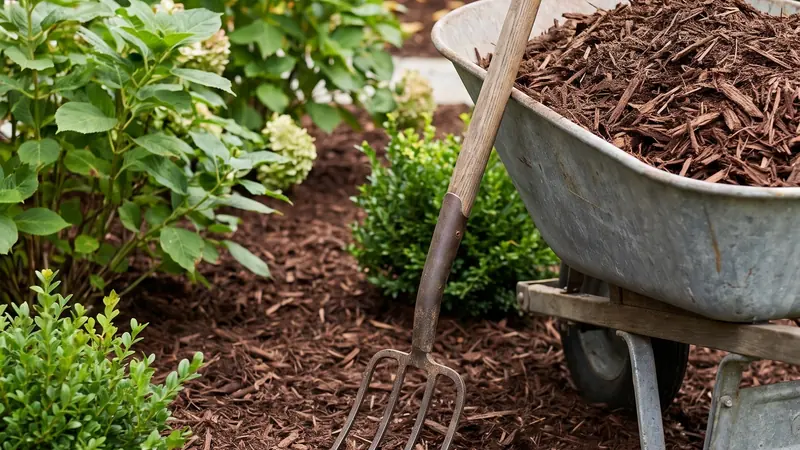
Organic mulch is shredded bark, wood chips, pine needles or similar plant material. Its biggest advantage is what happens underneath it.
Clemson Extension notes that organic mulch keeps soil cool in summer and warm in winter, and holds moisture in. As it breaks down it feeds the soil. Beds under mulch stay looser, darker and easier to plant into year after year.
It's also friendlier to change. Want to add a shrub next spring? Rake the mulch aside, dig, and rake it back. Try that with two tons of river rock.
One catch: fresh wood chips can tie up some nitrogen at the surface while they decompose. Utah State Extension flags this as a temporary effect. It matters most if you dig raw chips into the soil rather than leaving them on top.
What rock does better
Rock's case is simple. Once it's in, it stays in. Clemson puts it plainly: rock will be there for years, and it holds its place on sloped yards where mulch washes downhill after every storm.
Stone also drains fast. Utah State Extension points out that inorganic mulch gives the sharp drainage many drought-adapted plants want. In dry climates planted with succulents, ornamental grasses or native shrubs, gravel and rock are often the natural fit.
And rock doesn't burn. Along a foundation or around a fire pit, that's a practical reason to choose it.
Going with mulch? Check how deep to spread it for each kind of bed.
Read: how deep should mulch beThe main types of each
"Mulch" and "rock" each cover a range of products, and they don't all behave the same way.
Organic mulches. Clemson's list of common choices runs from single- and double-ground hardwood to pine bark, pine needles, pecan shells and peach pits. Double-ground hardwood knits together and resists washing. Pine bark nuggets are coarse and last longer, but they float in heavy rain.
Pine needles are light, easy to spread and stay put on gentle slopes. Wood chips from a tree service are often free, though they arrive with leaves and twigs mixed in.
Rock mulches. River rock is smooth and decorative. Crushed granite and decomposed granite pack down into a firmer surface. Lava rock is light for its size. Pea gravel is small and rounded, so it shifts underfoot.
Size matters for weeds and water. Utah State Extension notes that fine gravel under one centimeter can cut weed growth and evaporation about as well as wood chip mulch. Big decorative stones leave bigger gaps.
Mulch vs rock: cost over time
Rock almost always costs more on day one. It's priced higher per cubic yard, and it's far heavier, so delivery and spreading cost more too. Mulch wins the first bill easily.
The picture shifts over the years. Organic mulch breaks down, and Clemson suggests replacing it annually or every other year. Rock mostly needs cleaning, not replacing.
So the honest answer depends on how long you'll stay and how much labor you want to repeat. A bed you'll redesign in three years favors mulch. A strip along the driveway you never want to touch again favors rock.
Heat, water and your plants
This is where rock loses most gardeners. Clemson warns that rock retains heat and raises the ground temperature, leaving plants feeling like they're in a desert. Light-colored stone also bounces heat onto nearby leaves and walls.
Plants that evolved for dry, hot sites cope. Hydrangeas, hostas, azaleas and most vegetables don't. They wilt faster, need more water, and grow slower.
Rock also gives nothing back to the soil. Clemson notes there is no benefit for plant growth or soil health. Over a decade, soil under mulch improves while soil under rock stays the same or packs down.
How much mulch does your bed need?
Enter the size and depth to get bags or cubic yards, and see whether bulk is cheaper.
Use the mulch calculatorWeeds and upkeep
Neither one is weed-free. Mulch blocks light when it's deep enough, and the weeds that do sprout pull out easily from the loose layer.
Rock has a different problem. Clemson notes that weed seeds get through more easily because of the larger spaces between stones. Leaves and dust also settle into the gaps and turn into soil, and then weeds root there.
That's why rock beds usually go down over landscape fabric. It helps for a few years, then debris builds up on top of the fabric and the weeds come back. Plan to blow out leaves every fall to keep a rock bed clean.
Putting each one down properly
Both materials fail most often because of how they were installed, not what they are.
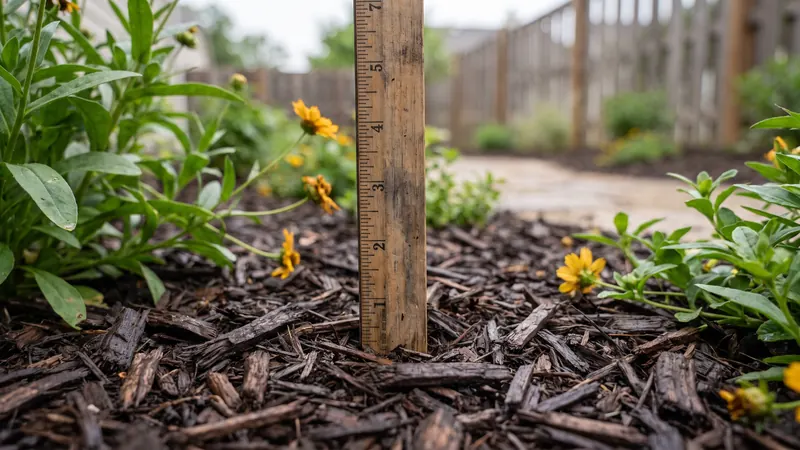
For mulch, pull weeds first, edge the bed so mulch doesn't spill into the lawn, and spread it 3 to 4 inches deep, as Utah State Extension recommends for organic mulch. Keep it a few inches back from trunks and stems.
For rock, the depth is shallower: 2 to 3 inches for inorganic mulch, per Utah State Extension. Dig out enough soil that the stone sits below the lawn edge, lay landscape fabric, then add a solid edge so stone doesn't migrate.
Rock is heavy. A cubic yard of stone typically weighs well over a ton, so plan for delivery close to the bed and for sore arms. A yard of wood mulch is a fraction of that weight.
- Water the plants well before covering the soil, whichever material you use.
- Leave a ring of bare soil around tree trunks, whichever material you use.
- Buy about 5% extra to cover settling and uneven spots.
Mulch and rock next to the house
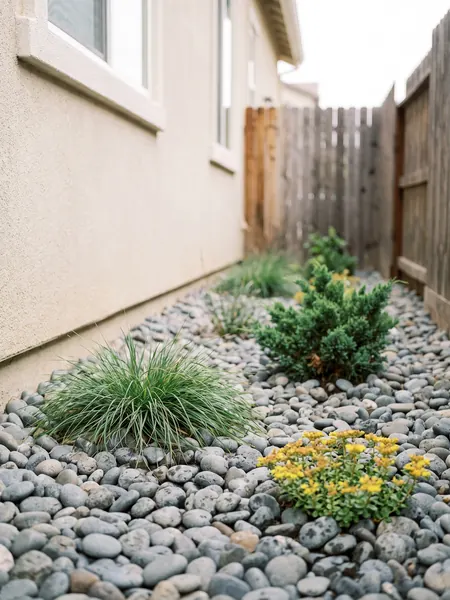
The strip along a foundation is where many homeowners switch to stone. It doesn't burn, it doesn't hold moisture against siding, and it doesn't need topping up in a spot that's awkward to reach.
Whatever you choose there, keep the ground sloping away from the walls so rain runs off. Neither mulch nor rock should sit high against siding.
A common layout uses a band of stone at the drip line of the roof, where water from the eaves splashes, with mulched planting beds beyond it. It gives the house a clean edge and keeps plants in soil that's still improving.
Changing your mind later
Switching from mulch to rock is easy: let the old mulch break down or rake it off, lay fabric, add stone.
Going the other way is hard work. Every stone has to be shoveled out, and gravel that has sunk into the soil is almost impossible to remove completely. Soil under old rock is often compacted and low in organic matter, so plan to add compost before planting.
If you're unsure, start with mulch. It's the easier decision to reverse.
Where each one works best
Our verdict
- Choose mulch for flower beds, vegetable gardens, shrub borders and anywhere you want plants to thrive and soil to improve.
- Choose rock for slopes that wash out, drainage swales, dry-climate plantings, and strips next to the house or a fire pit.
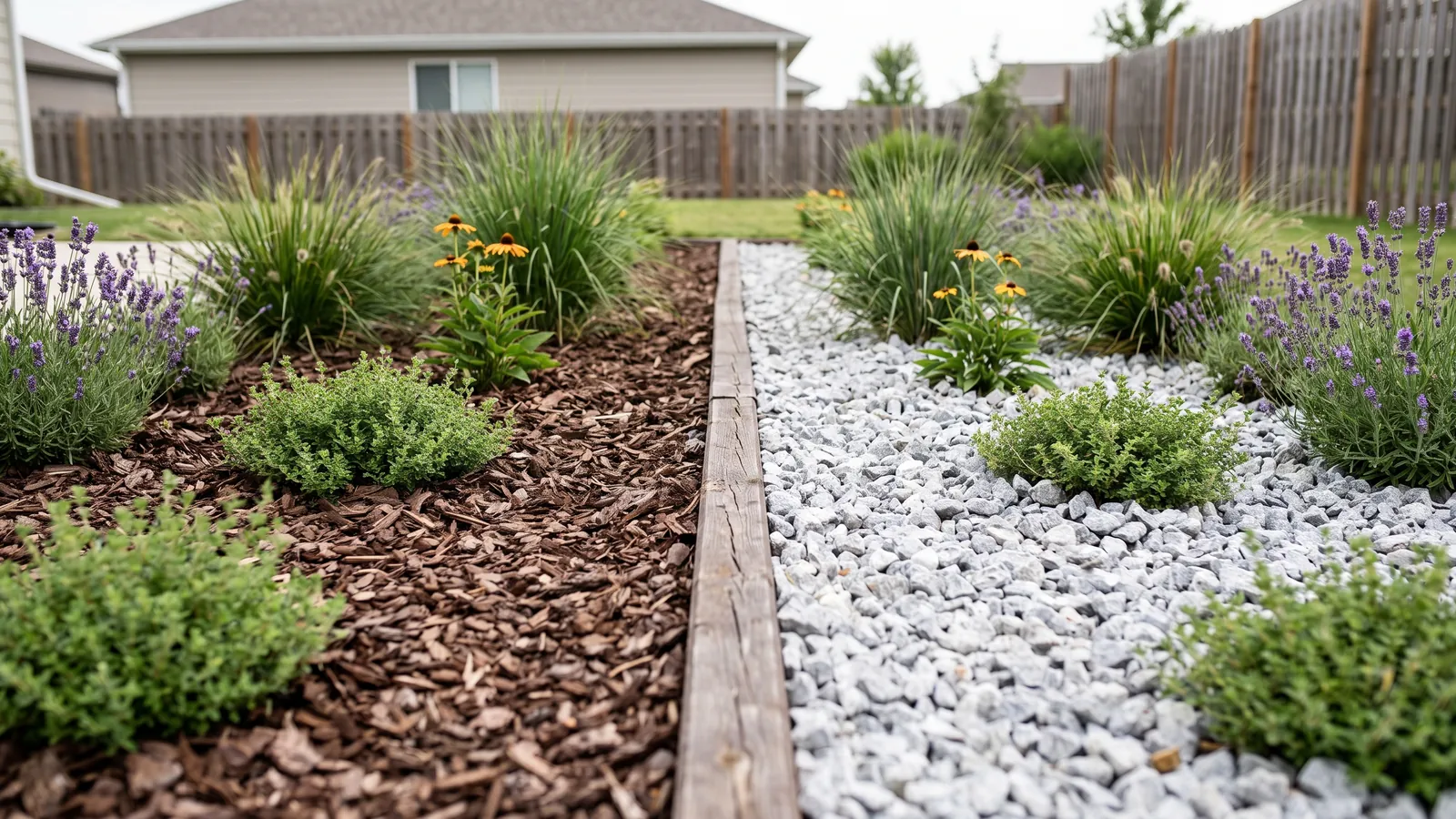
- Mix them when a yard has both: rock on the slope and along hardscape edges, mulch in the planted beds.
Many yards end up with both. Stone takes the hot, dry, hard-to-maintain edges, and mulch takes the beds where you actually grow things.
Choosing between mulch vs rock for your yard
Start with the plants. If they want cool, rich soil, mulch is the answer and rock will fight you every summer. If they're built for heat and drought, or the spot is a slope or a drainage path, rock earns its higher price.
Then think about the next ten years, not the next weekend. That long view is what settles mulch vs rock for most yards.
Sources