On this page
- Know your grass type first
- How to tell which grass you have
- When to plant grass seed for cool-season lawns
- When to plant warm-season grass seed
- Go by soil temperature, not the calendar
- Why spring seeding is harder
- Getting the seedbed ready in time
- How much seed to spread
- If you missed the window
- What to do in the weeks after seeding
- A simple watering plan for new seed
- Planning when to plant grass seed this year
When to plant grass seed depends on your grass. Cool-season grasses like tall fescue and Kentucky bluegrass do best seeded from mid-August to mid-October. Warm-season grasses like bermudagrass and zoysia do best from mid-May into June, once the soil is warm.
Know your grass type first
Every lawn grass falls into one of two groups, and each has its own planting window. Cool-season grasses grow hardest in spring and fall. Warm-season grasses grow hardest in summer heat.
| Grass | Type | Best time to plant |
|---|---|---|
| Tall fescue | Cool-season | Late summer to early fall |
| Kentucky bluegrass | Cool-season | Late summer to early fall |
| Perennial ryegrass | Cool-season | Late summer to early fall |
| Fine fescue | Cool-season | Late summer to early fall |
| Bermudagrass (seeded) | Warm-season | Late spring to early summer |
| Zoysia | Warm-season | Late spring to early summer |
| Buffalograss | Warm-season | Late spring to early summer |
In most of the northern half of the country, lawns are cool-season. Across the South, warm-season grasses dominate. The transition zone in between grows both, so check what's in your lawn now.
How to tell which grass you have
If you didn't plant the lawn yourself, watch it through a year. The pattern of green and brown gives it away.
- Green in spring and fall, stressed in July: almost certainly cool-season. Tall fescue and Kentucky bluegrass slow down and can go dormant in summer heat.
- Brown all winter, lush in summer heat: warm-season. Bermudagrass and zoysia turn tan after the first frosts.
- Spreads by runners across paths: often bermudagrass, zoysia or St. Augustine.
- Grows in upright clumps: often tall fescue.
A local garden center or your county extension office can identify a sample if you're unsure. Match new seed to what's already there, or the lawn will look patchy for years.
When to plant grass seed for cool-season lawns
The University of Maryland Extension names late summer to early fall, mid-August to mid-October, as the ideal window. UC IPM, in California, puts the best months at September and October.
Fall works because the soil is still warm from summer while the air is cooling off. Seed germinates fast in warm soil, and the young grass grows through cool autumn weather with fewer weeds competing.
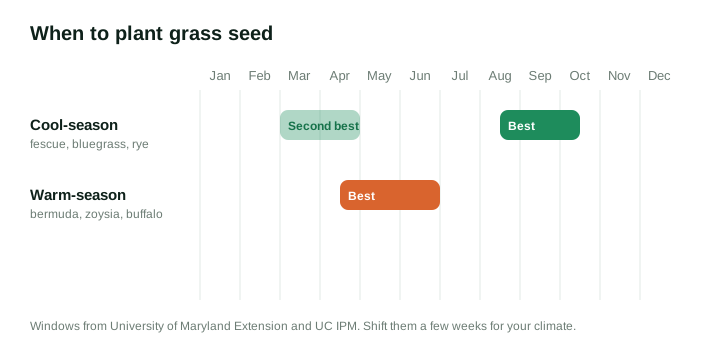
Spring is the backup. UC IPM lists March and April as the next best time for cool-season seed. Maryland Extension calls spring planting more challenging than fall, for reasons covered below.
When to plant warm-season grass seed
Warm-season grasses need heat to sprout. The University of Maryland Extension recommends seeding them in late spring and early summer, mid-May into June. In California, UC IPM puts the window at mid-April to mid-May.
Seed them too early and the seed sits in cold soil, where it rots or feeds birds. Seed them too late and the seedlings don't have enough summer left to toughen up before the first frost.
How much seed will you need?
Pick your grass type and lawn size to get pounds and bags of seed at extension rates.
Use the grass seed calculatorGo by soil temperature, not the calendar
Dates are a guide. Soil temperature is what the seed actually responds to. The University of Maryland Extension puts the best range for germination at 50 to 70°F, measured about an inch deep.
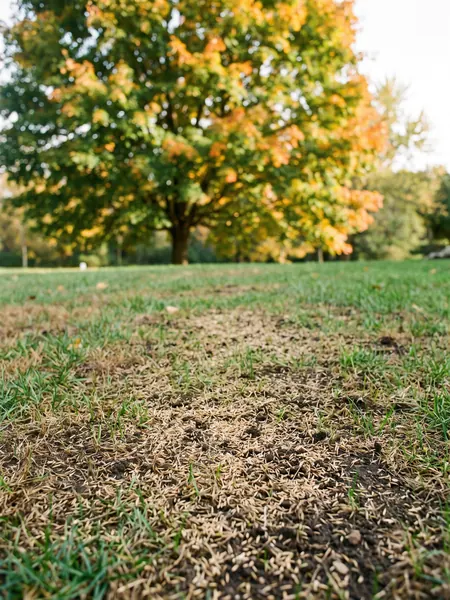
Pennington narrows it by type: cool-season seed germinates best in soil around 50 to 60°F, and warm-season seed when soil stays around 65 to 70°F. A cheap soil thermometer pushed an inch into the ground tells you more than any calendar.
Take the reading in the morning for a few days in a row. One warm afternoon doesn't mean the soil has warmed.
Why spring seeding is harder
Three things work against spring-sown cool-season grass. The soil is cold, so germination is slow. Summer heat arrives before the roots go deep. And crabgrass sprouts at the same time as your seed.
The usual crabgrass fix makes it worse. The University of Maryland Extension warns that pre-emergent herbicides prevent seed germination, grass seed included. Their advice: hold off on crabgrass preventer until the new turf has reached mowing height at least four times.
Short on time before summer? Compare seeding with laying sod.
Read: sod vs seedGetting the seedbed ready in time
Seeding windows are short, so prepare before the window opens. The University of Maryland Extension starts with a soil test, since fixing pH and nutrients is easier before grass is growing.
- Four to six weeks ahead: test the soil and order any lime or amendments it calls for.
- Two to three weeks ahead: kill weeds or old turf, and remove debris.
- The week you seed: loosen compacted spots, rake smooth, apply starter fertilizer, then sow.
On an existing lawn, mow short and rake out thatch before overseeding so the seed reaches soil. Seed sitting on dead grass rarely takes.
How much seed to spread
Seeding rates depend on seed size, and extension services publish them per 1,000 square feet. Penn State Extension's rates for home lawns:
| Grass | Pounds per 1,000 sq ft |
|---|---|
| Kentucky bluegrass | 2 to 3 |
| Kentucky bluegrass blend | 3 to 4 |
| Turf-type tall fescue | 6 to 8 |
| Turf-type perennial ryegrass | 4 to 5 |
| Fine fescue | 4 to 5 |
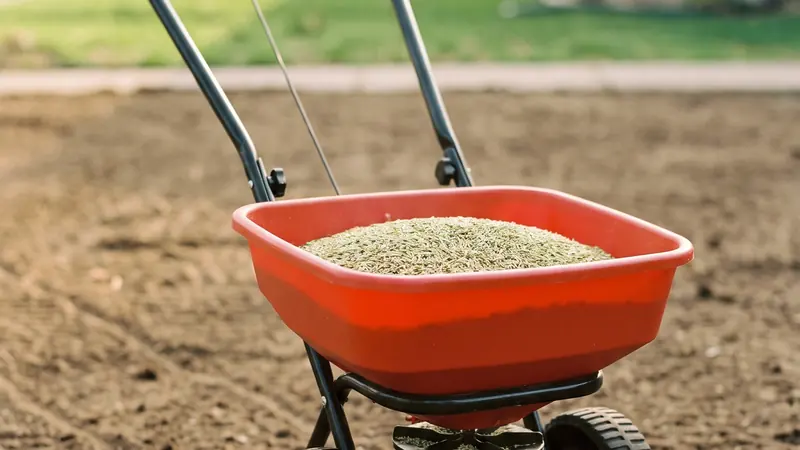
The University of Maryland Extension gives about 1 pound per 1,000 square feet for zoysia and bermudagrass. Spread half the seed walking one direction and half at a right angle for even coverage.
If you missed the window
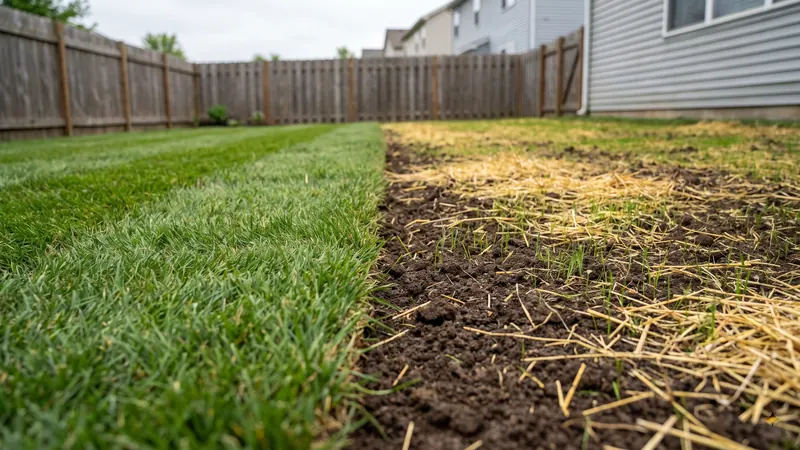
Seeding outside the window usually wastes seed. A cool-season lawn seeded in late spring meets summer heat with shallow roots, and a warm-season lawn seeded in fall meets frost before it toughens up.
If you missed fall, patch bare spots with a little mulch or erosion blanket to hold the soil, and plan the main seeding for the next window. If the lawn needs to be green sooner, sod can go down across much more of the year.
What to do in the weeks after seeding
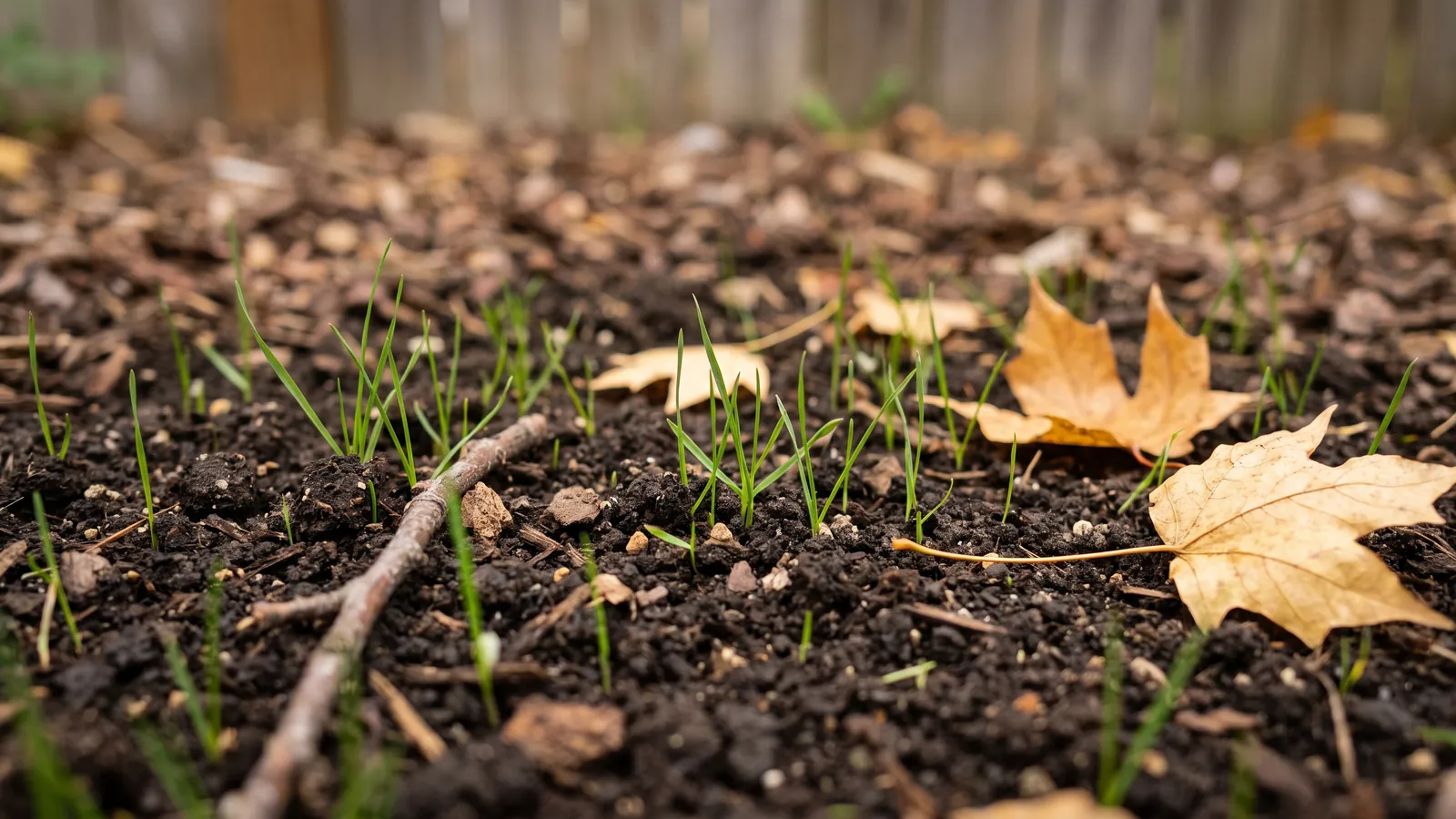
- Water lightly and often. Maryland Extension suggests about ¼ inch per session. Keep the top layer of soil moist until the grass is up.
- Feed with a starter fertilizer. Maryland Extension notes a phosphorus-containing starter suits new lawns.
- Mow at the right height. Make the first cut when grass reaches a third above your target height: at 4 inches for a 3 inch lawn.
- Keep off it. Foot traffic on wet seedbeds leaves bare footprints that stay bare.
A simple watering plan for new seed
Most failed seedings dry out rather than wash out. The University of Maryland Extension suggests about a quarter inch of water per session, and notes seedlings may need watering several times a day for several weeks.
| Stage | What to aim for |
|---|---|
| Sowing to sprouting | Keep the top half inch of soil moist; light watering once to several times a day |
| Seedlings up to 1 inch | Keep watering lightly; never let the surface crust over |
| Until the first mowings | Water less often but longer, so roots follow the water down |
| After a few mowings | Move to deep, occasional watering like an established lawn |
Put a straight-sided can on the lawn to see how long your sprinkler takes to deliver a quarter inch. It's usually far shorter than people guess.
Planning when to plant grass seed this year
Work backward from the window. For a fall seeding of a cool-season lawn, test the soil in summer, kill weeds and prepare the seedbed in early August, and sow as soon as the soil is ready. For warm-season grass, prep in spring and sow once the soil holds steady above 65°F.
Get the timing right and everything else gets easier. That's the real answer to when to plant grass seed.
Sources