On this page
- How much grass seed do I need?
- How to use the grass seed calculator
- Grass seed rates by type
- New lawn vs overseeding
- Grass seed needed by lawn size
- How much grass seed per square foot?
- Seed for bare spots in an existing lawn
- When to buy extra seed
- How much grass seed per acre?
- How much does a bag of grass seed cover?
- Read the seed label: purity, germination and PLS
- Seed at the right time
- How to spread grass seed evenly
- When to use a higher or lower rate
- What about zoysia and bermudagrass?
- Grass seed cost
- Common grass seed mistakes
- Before you order grass seed
- Frequently asked questions
How much grass seed do I need?
Grass seed is sown by pounds per 1,000 square feet, and the right rate depends almost entirely on the grass type. A 5,000 sq ft tall fescue lawn at 7 lb per 1,000 sq ft needs 35 lb of seed.
Tiny seeds like Kentucky bluegrass need 2–3 lb per 1,000 sq ft. Big seeds like turf-type tall fescue need 6–8 lb for the same area. Pick your grass, and the grass seed calculator fills in the extension rate.
Penn State Extension says seeding rates are designed to give about 1,000 to 2,000 seedlings per 1,000 sq ft. Small seeds take fewer pounds to reach that count.
Price per square foot, weeks to a usable lawn, and who should pick which.
Read the guideThe seeding windows for cool-season and warm-season grass, and why they work.
Read the guideHow to use the grass seed calculator
The grass seed calculator turns your lawn size and grass type into pounds and bags of seed. The "How we calculated this" panel shows each step, and the PDF report keeps them for your garden center.
Step 1: Enter the lawn area
Type the length and width in feet, or the square feet if you know them. For odd shapes, add the pieces in the square footage calculator first.
Step 2: Choose the grass type
The rate fills in from extension guidance. For a seed mix, type the rate printed on your bag.
Step 3: Choose new lawn or overseeding
A new lawn uses the full rate. Overseeding uses about half of it.
Step 4: Add the bag size and price
The result shows the whole bags to buy and the cost. Bags are rounded up.
Grass seed rates by type
New-lawn rates in pounds per 1,000 sq ft, from three university extension services. They mostly agree; where they differ, stay inside the range.
| Grass | Penn State | Univ. of Maryland | UC IPM |
|---|---|---|---|
| Tall fescue (turf-type) | 6–8 lb | 6–8 lb | 8–10 lb |
| Kentucky bluegrass | 2–3 lb | 2–3 lb | – |
| Perennial ryegrass | 4–5 lb | – | 6–9 lb |
| Fine fescue | 4–5 lb | 4–6 lb | 3.5–4.5 lb (red fescue) |
| Bermudagrass (seeded) | – | 1 lb | 1 lb |
| Zoysia | – | 1 lb | – |
| Buffalograss | – | – | 1.5–2 lb |
Penn State also lists lower rates for seed mixtures, because each species supplies part of the stand. Kentucky bluegrass at 80 to 90 percent of a mix is sown at 3 to 4 lb, and fine fescue at 40 to 50 percent of a mix at 4 lb.
New lawn vs overseeding
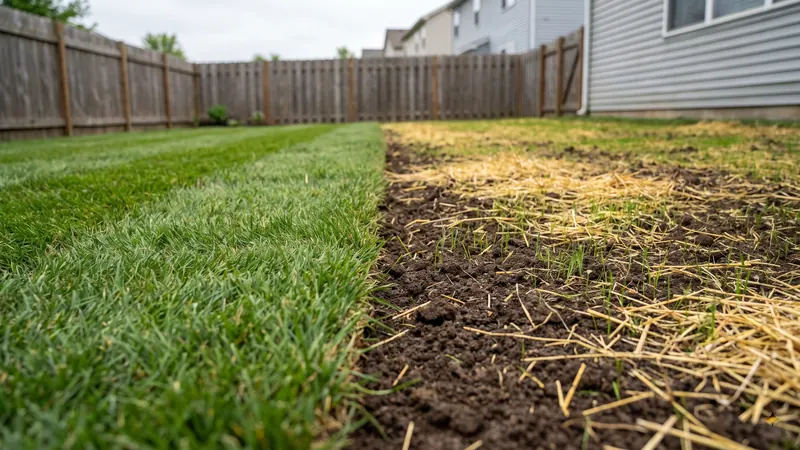
A new lawn on bare soil needs full coverage, so it takes the full rate. Overseeding adds seed to turf that is already there, so it takes less. Eartheasy puts it at about half the new-lawn rate for conventional turfgrasses.
Penn State Extension calls perennial ryegrass the best species for renovating a lawn because it germinates and establishes quickly. Its renovation rate is 2 to 5 lb per 1,000 sq ft.
Bare patches need the full rate
Heavy-traffic areas and patches with no grass need new-lawn rates even when you overseed the rest of the lawn.
Grass seed needed by lawn size
Pounds of seed for a new lawn at the middle of the extension range for each grass.
| Lawn size | Tall fescue (7 lb) | Kentucky bluegrass (2.5 lb) | Bermudagrass (1 lb) |
|---|---|---|---|
| 500 sq ft | 3.5 lb | 1.25 lb | 0.5 lb |
| 1,000 sq ft | 7 lb | 2.5 lb | 1 lb |
| 5,000 sq ft | 35 lb | 12.5 lb | 5 lb |
| 10,000 sq ft | 70 lb | 25 lb | 10 lb |
How much grass seed per square foot?
Divide the per-1,000 rate by 1,000. Tall fescue at 7 lb per 1,000 sq ft is 0.007 lb, about 0.11 ounce of seed, per square foot. Kentucky bluegrass at 2.5 lb is about 0.04 ounce. Small yard areas are easier to weigh in ounces than in pounds.
Seed for bare spots in an existing lawn
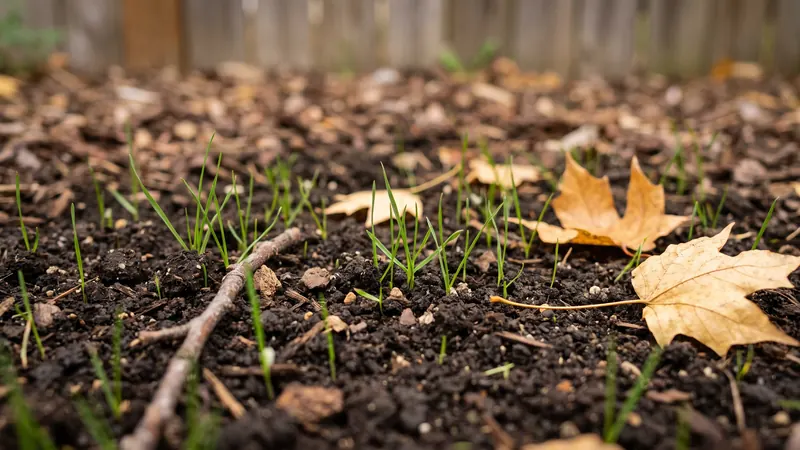
To patch an existing lawn, measure each bare spot and use the full new-lawn rate on it. Add the spots up in the grass seed calculator, then use the overseeding rate on the thin turf around them. Rake the spot so the seed touches soil.
When to buy extra seed
Eartheasy suggests sowing 15 to 20 percent heavier on slopes, where seed washes downhill, and covering it with light mulch. Seed also goes to birds and runoff on open soil.
Germination drops as seed ages, so buy extra if the bag is past its test date. Penn State Extension says the label shows the date of the most recent germination test. Check that date before you buy.
How much grass seed per acre?
An acre is 43,560 sq ft, so multiply the per-1,000 rate by 43.56.
| Grass | Rate per 1,000 sq ft | Per acre |
|---|---|---|
| Tall fescue | 7 lb | 305 lb |
| Kentucky bluegrass | 2.5 lb | 109 lb |
| Bermudagrass | 1 lb | 44 lb |
How much does a bag of grass seed cover?
Coverage depends on the rate, not just the bag weight. Divide the bag weight by the rate and multiply by 1,000.
| Bag size | Tall fescue | Kentucky bluegrass | Bermudagrass |
|---|---|---|---|
| 3 lb | 429 sq ft | 1,200 sq ft | 3,000 sq ft |
| 7 lb | 1,000 sq ft | 2,800 sq ft | 7,000 sq ft |
| 20 lb | 2,857 sq ft | 8,000 sq ft | 20,000 sq ft |
| 50 lb | 7,143 sq ft | 20,000 sq ft | 50,000 sq ft |
Read the seed label: purity, germination and PLS
The seed label lists the percent pure seed and the percent germination. Penn State Extension says germination is tested within a specified period, usually within nine months of sale, and that purity and germination together indicate seed quality.
Low-purity, low-germination seed is often cheap, but you need more of it. To find pure live seed, multiply percent pure seed by percent germination and divide by 100. At 92 percent purity and 80 percent germination, PLS is 74 percent, so you need about 1.35 lb of that seed for each pound of good seed.
Seed at the right time
Rate is half the story.
The University of Maryland Extension puts the best window for cool-season grasses in late summer to early fall, mid-August to mid-October, and for warm-season grasses in late spring to early summer.
UC IPM says cool-season grasses grow best seeded in September and October, and warm-season grasses from mid-April to mid-May.
Penn State says seed will not germinate when the soil gets too cold in late fall, and summer seedings face heat, drought and disease. See when to plant grass seed for the soil temperatures behind the windows.
How to spread grass seed evenly
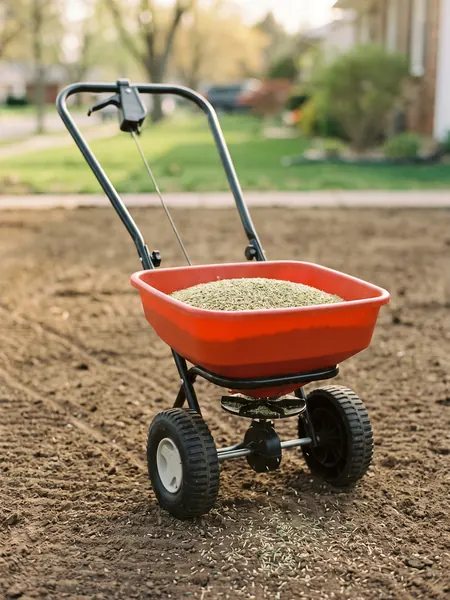
Rake and level the soil so the seed makes good contact. Penn State suggests calibrating the spreader to deliver half the desired amount and covering the lawn twice in opposite directions. That evens out the gaps a single pass leaves.
When to use a higher or lower rate
Penn State says higher rates are sometimes used when seeding late in the season, when a quick dense stand is wanted, or on turf with heavy wear. Lower rates suit low-maintenance areas that are mowed rarely, but the stand will be thin and weeds can be more of a problem.
What about zoysia and bermudagrass?
The University of Maryland Extension says zoysia from seed is challenging and not recommended, because of high cost, limited availability and unreliable germination. In Maryland it is sold mainly as plugs. Bermudagrass is sown at 1 lb per 1,000 sq ft where it is grown from seed, and is also planted as sprigs.
Grass seed cost
Enter your bag size and price in the grass seed calculator. It multiplies the number of bags by the price. Premium and coated blends cost more per pound, so compare cost per square foot covered, not per bag.
Common grass seed mistakes
- Using one rate for every grass. Tall fescue and bluegrass differ by a factor of three.
- Doubling the rate. Too much seed makes a dense stand that invites disease.
- Seeding in summer heat. Wait for the right window.
- Ignoring the label. Low germination means you need more seed.
Before you order grass seed
Measure the lawn, pick your grass and decide between a new lawn and overseeding. Let the grass seed calculator turn it into pounds and bags, check the rate and germination on your seed label, and download the PDF report for your garden center.
Frequently asked questions
How much grass seed do I need per 1,000 square feet?
It depends on the grass. University extension rates for a new lawn run from about 1 lb (bermudagrass, zoysia) to 6–8 lb (turf-type tall fescue) per 1,000 sq ft, because seed size varies so much.
How much seed do I need to overseed?
Overseeding a thin lawn takes less seed than starting from bare soil. Eartheasy puts it at about half the new-lawn rate for conventional turfgrasses, and Penn State gives 2 to 5 lb per 1,000 sq ft for renovating with perennial ryegrass. Check the rate on your bag.
What happens if I put down too much grass seed?
Penn State Extension says an excessively dense stand can cause disease problems and mower scalping. Simply raising the rate does not guarantee a healthy lawn, so stay inside the recommended range.
How much grass seed do I need per acre?
Multiply the per-1,000 rate by 43.56, because an acre is 43,560 sq ft. Turf-type tall fescue at 7 lb per 1,000 sq ft is about 305 lb per acre.
What is pure live seed?
Pure live seed (PLS) is the share of the bag that is both pure seed and able to germinate. Penn State multiplies percent pure seed by percent germination and divides by 100. For example, 92% purity × 80% germination ÷ 100 = 74% PLS.
How accurate is the grass seed calculator?
It gives the exact pounds for the area and rate you enter. The rate is the part that varies, so pick your grass type and compare the result with the rate printed on your seed label.
How much does a bag of grass seed cover?
Divide the bag weight by the seeding rate and multiply by 1,000. A 50 lb bag of tall fescue at 7 lb per 1,000 sq ft covers about 7,100 sq ft of new lawn.
Sources