On this page
- Step 1Measure the bed and work out the volume
- Step 2Decide how deep the soil really needs to be
- Step 3Clear or smother what's underneath
- Step 4Add cheap bottom fill to deep beds
- Step 5Choose your soil mix
- Step 6Buy in bulk or in bags
- Step 7Fill in layers and mix as you go
- Step 8Water it and let it settle
- Step 9Test the soil, then top up each year
- Use what you already have
- Soil mix options compared
- How much a typical bed takes
- Mistakes that cost money later
- How to fill a raised bed again next season
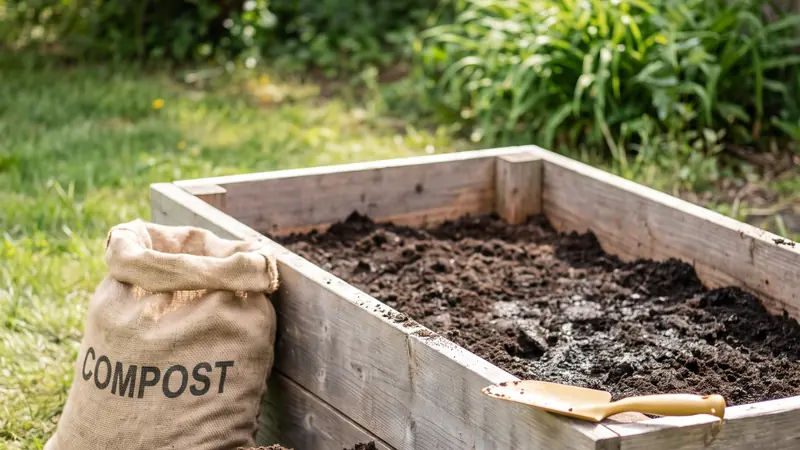
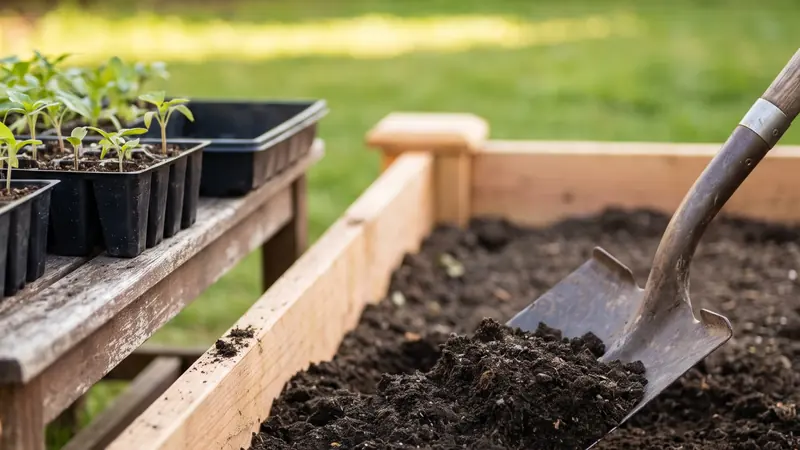
Here's how to fill a raised bed without overspending: fill the root zone with a compost and topsoil blend, 8 inches deep for greens and 12 inches or more for tomatoes, and put cheap woody material in the bottom of deeper beds. Then water, let it settle and top up with compost.
Step 1Measure the bed and work out the volume
Multiply length × width × depth, all in feet. An 8 ft × 4 ft bed, 1 ft deep, holds 32 cubic feet of soil. That's a little over a cubic yard, or about 21 bags of 1.5 cu ft.
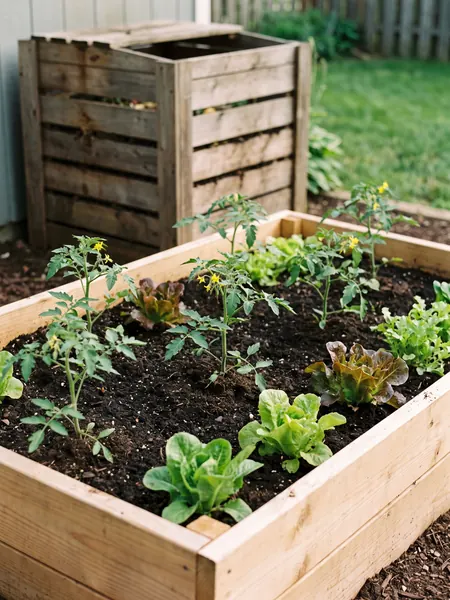
Measure inside the boards, not outside. Thick lumber on a small bed can cut the real volume by a surprising amount.
Step 2Decide how deep the soil really needs to be
A tall bed doesn't have to be filled to the top with expensive soil. What matters is how deep your crops' roots go. The University of Maryland Extension gives these minimums:
| Crops | Minimum soil depth |
|---|---|
| Leafy greens, beans, cucumbers | 8 in minimum |
| Peppers, tomatoes, squash | 12 to 24 in |
If your bed is 24 inches tall and you're growing lettuce, the bottom half can be something cheaper. That's where most of the savings come from.
Step 3Clear or smother what's underneath
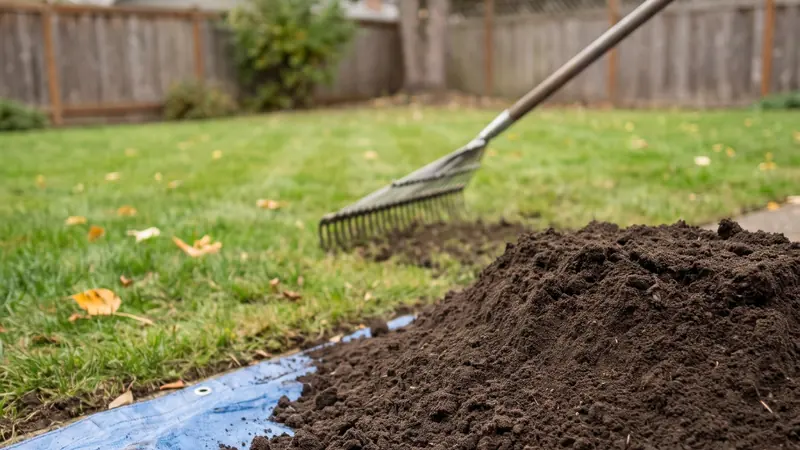
Beds on grass need the grass stopped. Cut it short, then cover it with overlapping cardboard or a thick layer of compost. Maryland Extension suggests 2 to 4 inches of compost to smother turf and weeds, and allowing about 6 to 8 weeks for the turf to break down.
On a patio or hard ground, skip this step. Do make sure water can drain out of the bottom.
Step 4Add cheap bottom fill to deep beds
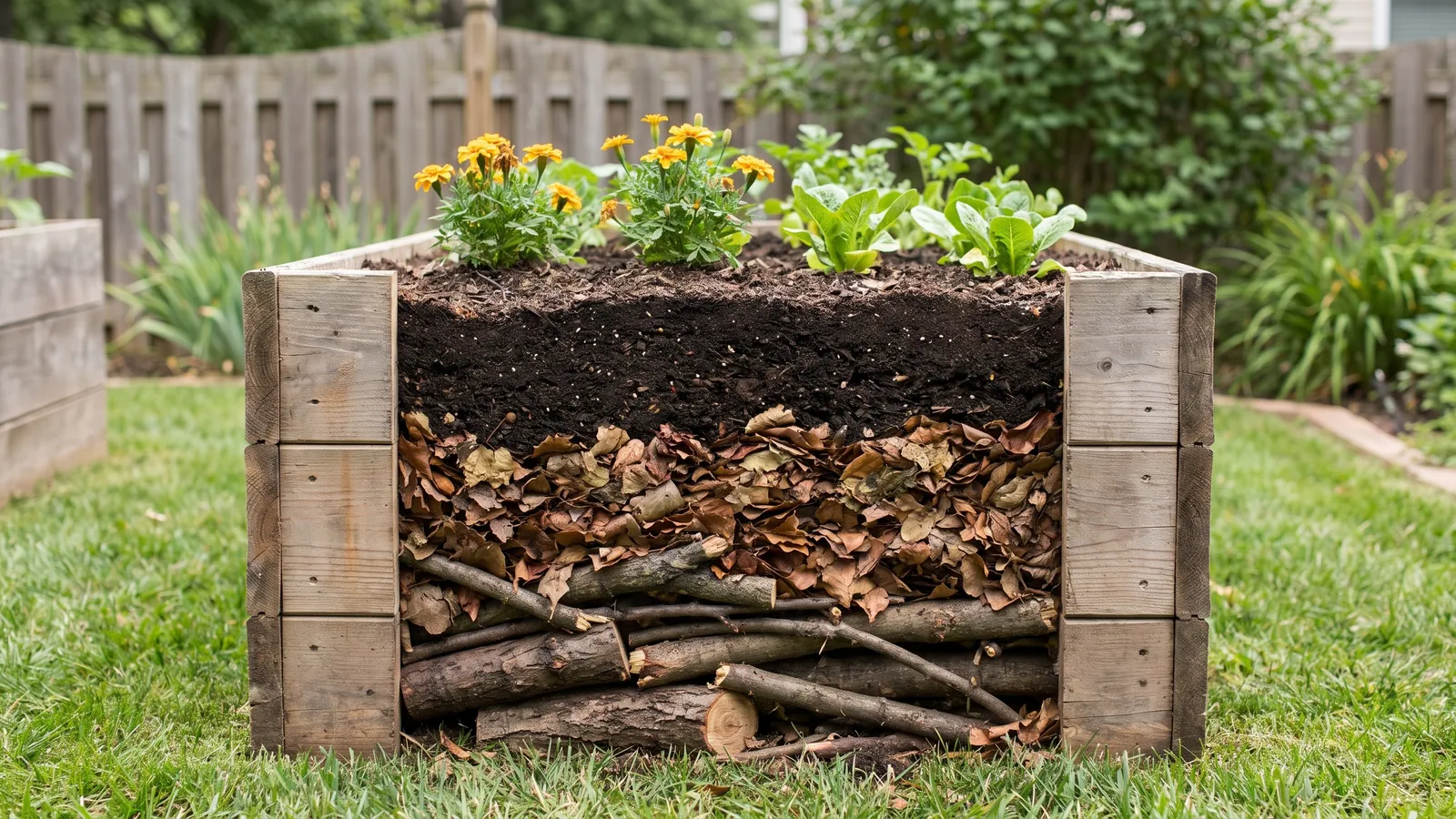
For beds taller than your crops need, fill the bottom with woody material: logs, thick branches, twigs, then leaves. This borrows from hügelkultur, a mounded growing method built on buried wood. The wood rots slowly and releases nutrients for years.
Keep at least 8 to 12 inches of real soil mix above it, more for tomatoes and squash. Leave out treated lumber, plastic and anything that won't break down.
Step 5Choose your soil mix
Garden soil alone packs down in a raised bed. Potting mix alone is too light and too expensive. The University of Maryland Extension suggests two blends:
| Blend | Ratio |
|---|---|
| Compost + purchased topsoil | 1 : 2 or 1 : 1 |
| Compost + soilless growing mix | 1 : 1 |
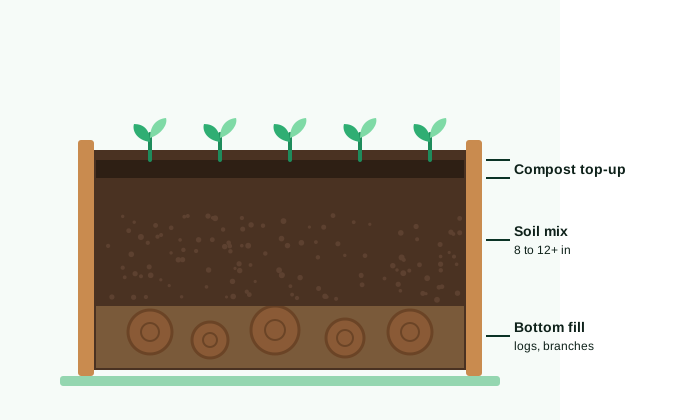
Maryland Extension aims for organic matter at 25 to 50% by volume. A 1:1 compost and topsoil blend lands in that range. Check purchased topsoil before it's dumped: they warn against soil that's very sandy or clayey, smells foul, or shows gray mottling.
Step 6Buy in bulk or in bags
Bags are easy for one small bed. Past a cubic yard or so, bulk delivery by the yard is almost always cheaper, and it saves a pile of plastic.
Many landscape yards sell a ready-made raised bed blend. Ask what's in it. You want compost and screened topsoil, not mostly sand or wood fines.
How much mix will your beds take?
Enter the number and size of your beds. You'll get topsoil and compost amounts, with bottom fill if you want it.
Use the raised bed calculatorStep 7Fill in layers and mix as you go
Add the soil mix in 4 to 6 inch layers. Blend compost and topsoil as you add each layer, rather than stacking pure compost on pure topsoil. Distinct layers can stop water moving evenly through the bed.
Fill slightly above the rim. It will sink.
Step 8Water it and let it settle
Soak the bed and let it sit a few days before planting. The mix settles, air pockets close, and you'll see where to add more. Beds filled over smothered turf keep settling for weeks as the grass underneath breaks down.
Top it back up to about an inch below the rim.
Step 9Test the soil, then top up each year
A basic soil test is cheap. Maryland Extension puts the ideal pH at 6.2 to 6.8 for most vegetables and flowers, and recommends a lead test for food gardens. Don't grow vegetables in soil with total lead over 400 ppm.
Each year the mix shrinks as organic matter breaks down. Oregon State University Extension suggests adding a quarter inch to 1 inch of compost to existing beds annually.
Use what you already have
The cheapest soil is the soil already in your yard. The University of Maryland Extension suggests digging the top 2 to 3 inches of soil and dead vegetation from the paths between beds and adding it to the beds.
Other free or cheap materials that work in the lower layers of a deep bed:
- Fallen leaves, shredded if you can, in a layer above the woody fill.
- Untreated logs and branches from pruning or storm cleanup.
- Grass clippings from a lawn that hasn't been sprayed with herbicide, in thin layers.
- Old potting mix from last year's containers, mixed with compost.
Keep these below the root zone and cover them with at least 8 inches of real soil mix. They break down and sink, so expect to top up more in the first year.
Soil mix options compared
Here's how the common choices compare. The first two blends are the ones the University of Maryland Extension recommends.
| Option | What's in it | Good for | Watch out for |
|---|---|---|---|
| 1:1 compost + topsoil | Equal parts | Most vegetables and flowers | Topsoil quality varies by supplier |
| 1:2 compost + topsoil | One part compost, two parts topsoil | Larger beds on a budget | Needs yearly compost top-ups |
| 1:1 compost + soilless mix | Compost with a peat or bark-based mix | Beds on patios, light and free-draining | Dries out faster in summer |
| Bagged raised-bed mix | Varies by brand | One or two small beds | Costly for big beds; check the label |
Avoid filling a bed with plain garden soil dug from the yard. It compacts in a raised bed and drains poorly. Pure compost is too rich and shrinks a lot as it breaks down.
How much a typical bed takes
Common bed sizes, filled 12 inches deep with soil mix:
| Bed size | Cubic feet | Cubic yards | Bags of 1.5 cu ft |
|---|---|---|---|
| 4 × 4 ft | 16 | 0.59 | 11 |
| 4 × 8 ft | 32 | 1.19 | 22 |
| 4 × 12 ft | 48 | 1.78 | 32 |
| 3 × 6 ft | 18 | 0.67 | 12 |
At 24 inches deep, double those numbers, or fill the bottom foot with woody material and buy only the top foot of mix.
Mistakes that cost money later
- Treated or painted scrap wood in the fill. Only untreated logs and branches belong in the bottom.
- Plastic "fillers". Bottles and pool noodles take up space but do nothing for roots and never break down.
- Unchecked topsoil. Maryland Extension warns against soil that's very sandy or clayey, smells foul or shows gray mottling.
- Filling to the brim with fresh compost. It sinks several inches in the first season.
- Skipping the soil test. pH and lead are easy to check before planting and hard to fix after.
How to fill a raised bed again next season
You won't need to refill a bed from scratch. Pull spent plants, loosen the top few inches, and add compost to bring the level back up. If the bed sank a lot, add a few inches of your original mix first.
That's how to fill a raised bed once, cheaply, and keep it productive for years with nothing more than compost.
Sources