On this page
- How much soil for a raised bed?
- How to use the raised bed soil calculator
- Soil for common raised bed sizes
- Garden bed soil calculator: in-ground beds
- Raised bed soil mix recipes
- How deep to fill
- Bags or bulk for raised beds
- Raised bed soil cost
- Common raised bed mistakes
- Before you order raised bed soil
- Frequently asked questions
How much soil for a raised bed?
Multiply length × width × depth for each bed, add them up, and split the total into your mix. A single 8×4 ft bed, 12 inches deep, holds 32 cubic feet, or about 1.2 cubic yards.
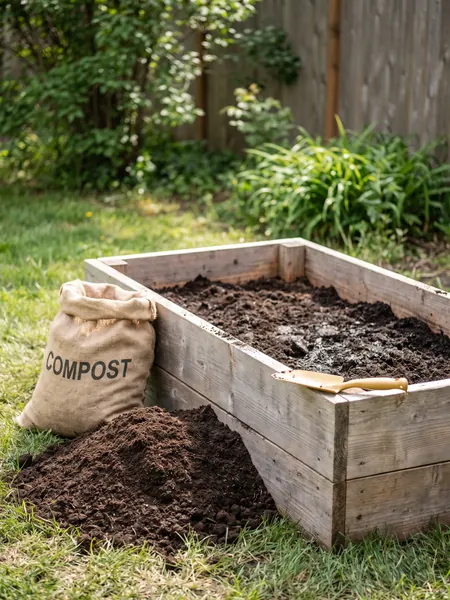
Gardener's Supply gives a 3 × 6 ft bed with 10 inch sides as 15 cubic feet. The mix matters as much as the volume. The University of Maryland Extension suggests compost and topsoil at 1:2 or 1:1, or compost and a soilless mix at 1:1.
How to use the raised bed soil calculator
The raised bed soil calculator splits the total volume of your beds into ingredients you can buy. The "How we calculated this" panel shows each step, and the PDF report lists the mix for your supplier.
Step 1: Enter the number and size of your beds
Type how many beds you have and the inside length and width in feet. Use the same size for each, or run the tool once per size.
Step 2: Choose the fill depth
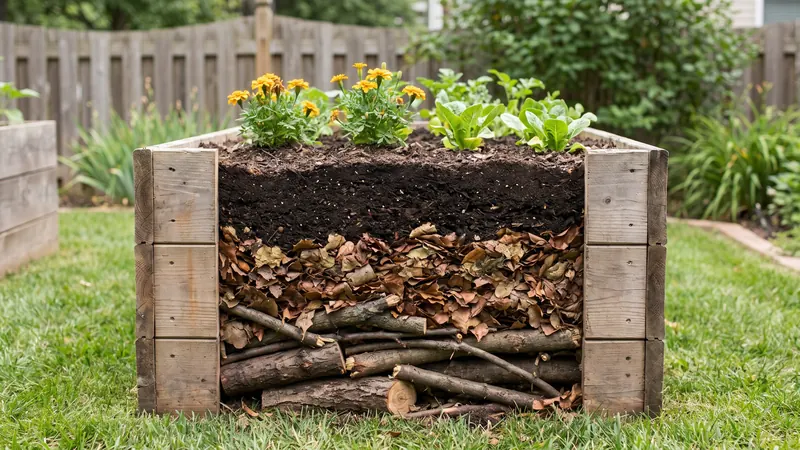
Pick 6 to 24 inches. Match it to your crops with the table below. Turn on bottom fill to leave the lower third for logs, branches or leaves.
Step 3: Pick the mix recipe
Choose a recipe and the calculator shows the cubic feet, cubic yards and bags of each ingredient.
The soil mix, the depth your crops need, and what can go in the bottom.
Read the guideSoil for common raised bed sizes
| Bed | 8 in deep | 12 in deep | 18 in deep |
|---|---|---|---|
| 4 × 4 ft (16 sq ft) | 11 cu ft · 0.40 yd³ | 16 cu ft · 0.59 yd³ | 24 cu ft · 0.89 yd³ |
| 3 × 6 ft (18 sq ft) | 12 cu ft · 0.44 yd³ | 18 cu ft · 0.67 yd³ | 27 cu ft · 1.00 yd³ |
| 4 × 8 ft (32 sq ft) | 21 cu ft · 0.79 yd³ | 32 cu ft · 1.19 yd³ | 48 cu ft · 1.78 yd³ |
Garden bed soil calculator: in-ground beds
A garden bed soil calculator does the same volume math for beds at ground level. For an in-ground bed you usually add only a few inches, so use the soil calculator with a 2 to 4 inch depth.
Raised bed soil mix recipes
| Recipe | Ingredients | Source |
|---|---|---|
| 1:1 | Half topsoil, half compost | UMD Extension |
| 2:1 | Two parts topsoil, one part compost | UMD Extension |
| 1:1 soilless | Half soilless mix, half compost | UMD Extension |
| 60/30/10 | 60% topsoil, 30% compost, 10% soilless mix | Gardener's Supply |
| Mel's Mix | Equal thirds of compost, peat or coir, and coarse vermiculite | Square Foot Gardening (via Eartheasy) |
A raised garden bed lets you fill with a blend better than your native soil, Gardener's Supply says, so the plants you grow get nutrients, drainage and structure. Gardener's Supply adds that peat moss should be no more than 20 percent of the total mix.
Eartheasy also lists a 50% soil, 30% compost and 20% potting mix blend.
How deep to fill
| Crop | Minimum soil depth |
|---|---|
| Leafy greens, beans, cucumbers | 8 in |
| Peppers, tomatoes, squash | 12–24 in |
Beds deeper than your crops need can take a cheap bottom layer. Turn on bottom fill and the calculator leaves the lower third for logs, branches or leaves.
Bags or bulk for raised beds
Bagged soil is labeled by volume. A 0.75 cubic foot bag needs 36 per cubic yard, a 1 cubic foot bag 27, a 1.5 cubic foot bag 18 and a 2 cubic foot bag 14. Under one cubic yard, bags are the easy choice. Above it, bulk soil is cheaper.
Beds settle
Compost-rich mixes sink as they break down. Top up with an inch or two of compost each season instead of refilling.
Raised bed soil cost
Bulk soil and compost are cheaper per cubic foot than bags, but you need a place to dump them and a wheelbarrow. Add up the cost of every ingredient from your own prices, and add delivery for bulk orders.
Common raised bed mistakes
- Filling with topsoil alone. It compacts and drains poorly. Blend in compost and some airy mix.
- Measuring the outside of the bed. Use the inside dimensions and the depth you will actually fill.
- Skipping the settling top-up. Fresh mix drops after the first waterings.
- Too little depth for the crop. Tomatoes and squash want 12 inches or more.
Before you order raised bed soil
Measure the inside of each bed, pick the depth for your crops and a recipe, and let the raised bed soil calculator turn it into cubic feet, yards and bags of each ingredient. Keep a bag for settling, and download the PDF report for your supplier.
Frequently asked questions
What is the best soil mix for a raised bed?
The University of Maryland Extension suggests compost and purchased topsoil in a 1:2 or 1:1 ratio, or compost and a soilless growing mix in a 1:1 ratio. Gardener's Supply recommends 60% topsoil, 30% compost and 10% soilless mix.
How deep should a raised bed be?
At least 8 inches for leafy greens, beans and cucumbers, and 12 to 24 inches for peppers, tomatoes and squash (UMD Extension).
How much soil do I need for a 4 × 8 raised bed?
A 4 × 8 ft bed filled 12 inches deep holds 32 cubic feet, about 1.2 cubic yards. That is 22 bags of 1.5 cu ft. At 8 inches deep it holds 21 cubic feet.
How accurate is the raised bed soil calculator?
It gives the exact volume of the bed and splits it by recipe. Soil settles after watering, so keep a bag or two to top up. Enter the inside dimensions of the bed, not the outside.
Can I put logs or branches in the bottom of a raised bed?
Yes, in deep beds. The idea comes from hügelkultur: woody material in the bottom breaks down slowly and cuts the amount of soil you buy. Keep at least the top 8 to 12 inches as real soil mix.
Should I buy bagged soil or bulk for raised beds?
Eartheasy's rule of thumb: under one cubic yard, buy bags. From one yard up, bulk delivery or a truck load is usually cheaper. Bag sizes run from 0.75 to 2 cubic feet, so 27 cubic feet takes 36 to 14 bags.
What is the difference between raised bed soil and potting soil?
Raised bed soil includes topsoil for structure and is heavier. Potting soil is a light, soilless blend made for containers, and it is too expensive to fill big beds.
Sources