Which of our soil calculators do you need?
Each material has its own depth and its own weight, so each gets its own calculator. Pick the one that matches the job:
- Filling a bed, planter or pot: the soil calculator, which gives cubic yards, cubic feet and bags.
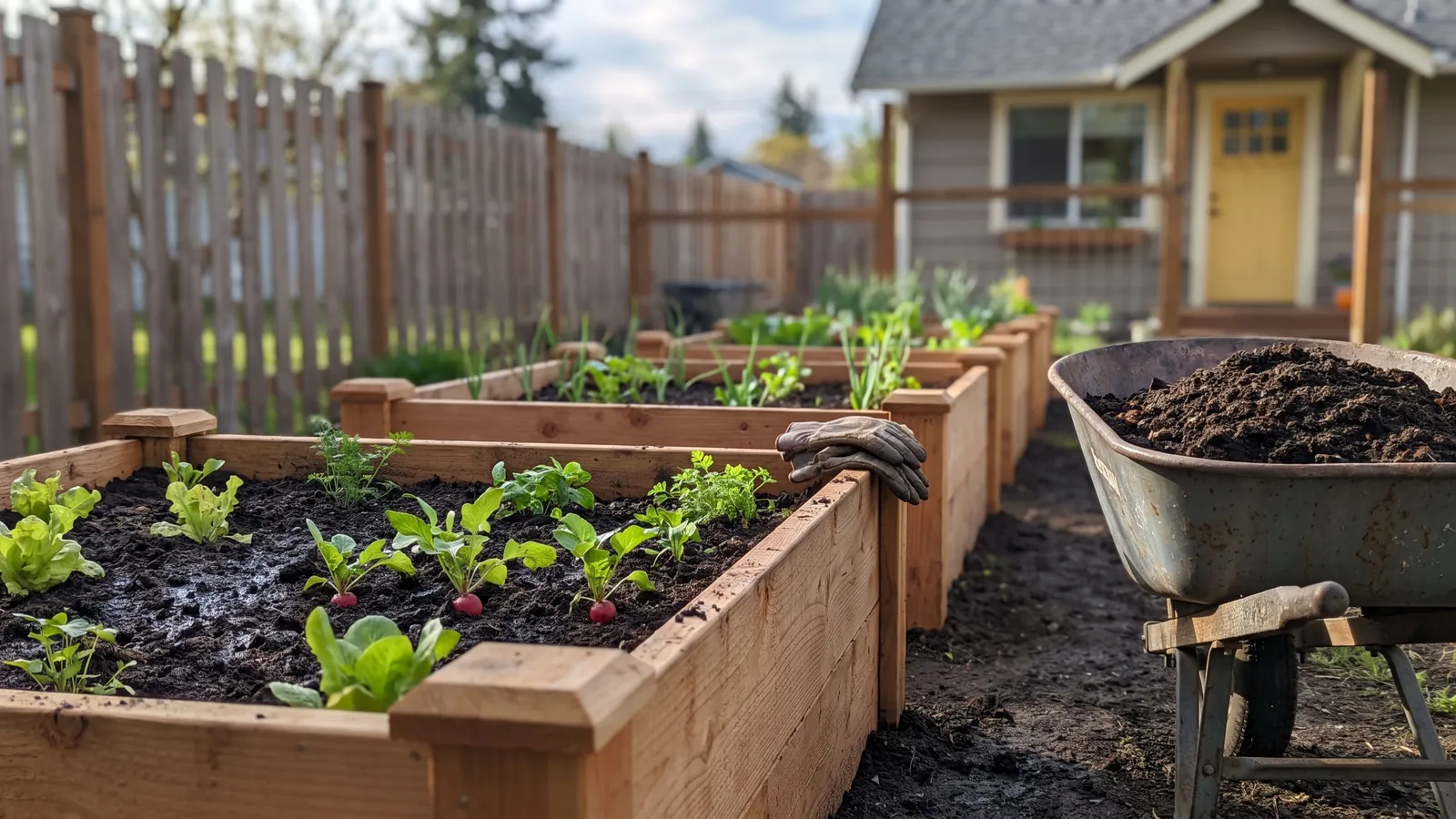
- Filling raised beds with a mix: the raised bed soil calculator, which splits the order into topsoil, compost and mix.
- Leveling a lawn or preparing for new sod: the topsoil calculator, with the depth set by the job.
- Raising the grade or filling a hole: the fill dirt calculator, with compaction and truckloads.
- Top-dressing a lawn or amending a bed: the compost calculator.
- Working out how many plants fit: the plant spacing calculator.
How soil calculators work
Every soil calculator runs the same three steps. Only the depth, the weight and the extra allowance change from one material to the next.
Worked example: an 8 × 4 ft raised bed filled 12 inches deep
32 sq ft × 12 in ÷ 12 = 32 cubic feet, or 1.19 cubic yards. In 1.5 cubic foot bags that is 22 bags. Buying in bulk, order 1.2 yards. The same bed at 6 inches takes half as much, which is why the depth matters more than anything else.
Soil types compared: fill dirt, topsoil, garden mix, compost and potting mix
These are different products with different jobs. Depths come from the Old Farmer's Almanac, the University of Maryland Extension, Soil Depot and Oregon State University Extension. Weight is Topsoil.com's range for soil and Omni Calculator's figure for compost.
| Material | What it is for | Typical depth | Weight per cubic yard |
|---|---|---|---|
| Fill dirt | Raising grade and filling holes. Not for planting alone. | 6–12 in to build up grade | 2,000–2,700 lb |
| Topsoil | Lawns and beds. Screened native soil. | 1–3 in to level a lawn, 4–6 in under sod | 2,000–2,700 lb |
| Garden mix | Topsoil blended with compost, for vegetables and flowers. | 6–12 in in a raised bed | varies with the blend |
| Compost | Feeds the soil. Too light to use alone. | ¼–½ in on a lawn, 3–4 in mixed into a new bed | about 1,080 lb |
| Potting mix | Soilless mix for pots. Too costly for big beds. | To within an inch of the rim | light, varies |
Soil depth by job
The depth you choose drives the order. These are the numbers the calculators start from.
| Job | Depth | Source |
|---|---|---|
| Leveling or repairing a lawn | 1–3 in of topsoil | Almanac |
| Covering sown grass seed | ¼–½ in of topsoil | UMD Extension |
| Under new sod | 4–6 in of topsoil | Almanac |
| New garden bed over existing soil | 6 in of topsoil | Almanac |
| Raised bed | 6–12 in | Almanac |
| Leafy greens, beans, cucumbers | 8 in minimum soil depth | UMD Extension |
| Peppers, tomatoes, squash | 12–24 in minimum soil depth | UMD Extension |
| Compost on an existing lawn | ¼–½ in | OSU Extension |
| Compost in a new vegetable bed | 3–4 in mixed into the top 8–12 in | OSU Extension |
How to measure beds of any shape
Measure the bed's dimensions in feet, including the height of the fill.
A rectangular bed is length × width × height. A round bed or a pot is π × radius² × height. A triangle is half the base times the width times the height. For an L-shaped or U-shaped raised garden bed, split it into rectangles, work out each volume and add them for the total volume.
Measure the fill depth, not the wall
Raised beds are rarely filled to the top of the wall. Measure the depth you will actually fill, and leave an inch or two below the rim.
Soil for pots, planters and containers
Containers take potting mix, not garden soil. Potting mix is soilless and made from materials such as peat, perlite and vermiculite, so it drains well and weighs less. A 16 inch pot filled 14 inches deep holds about 1.6 cubic feet. Gardener's Supply says the mix should reach within an inch or so of the rim.
Mulch goes on top of the soil, not instead of it, so work it out separately in the mulch calculator.
How many bags of soil are in a cubic yard?
Bagged soil is labeled by volume, so read the cubic feet on the bag. A cubic yard is 27 cubic feet.
| Bag size | Bags per cubic yard | Bags for a 32 cu ft bed |
|---|---|---|
| 0.75 cu ft | 36 | 43 |
| 1 cu ft | 27 | 32 |
| 1.5 cu ft | 18 | 22 |
| 2 cu ft | 14 | 16 |
Common project sizes
| Project | Size | Depth | Soil | About |
|---|---|---|---|---|
| Raised bed | 4 × 8 ft | 12 in | Garden mix | 1.19 yd³ |
| Garden bed | 10 × 10 ft | 6 in | Garden mix | 1.85 yd³ |
| Lawn leveling | 1,000 sq ft | 2 in | Topsoil | 6.2 yd³ |
| Under new sod | 1,000 sq ft | 4 in | Topsoil | 12.3 yd³ |
| Filling a low spot | 20 × 10 ft | 8 in, +15% compaction | Fill dirt | 5.7 yd³ |
Soil mixes for raised beds
Raised-bed gardening works for vegetables, herbs and flowers, and an easy mix saves money.
Gardener's Supply recommends 60 percent topsoil, 30 percent compost and 10 percent soilless potting mix for most raised beds. If you lack good topsoil, a 50-50 blend of soilless growing mix and compost works. The University of Maryland Extension suggests compost and topsoil at 1:2 or 1:1.
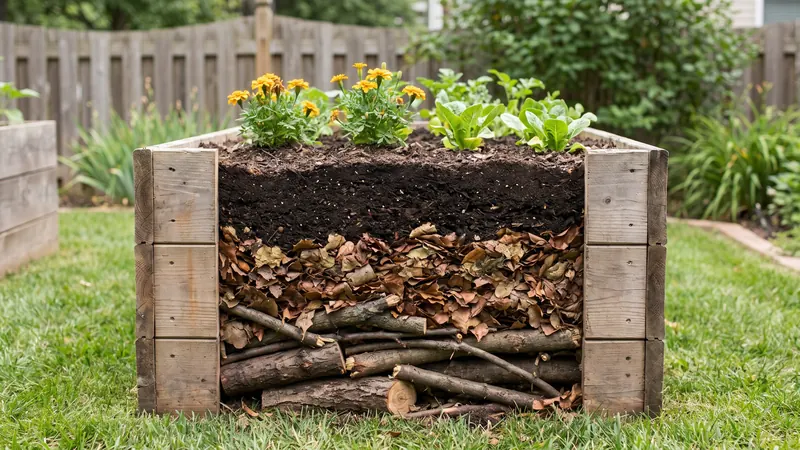
The raised bed soil calculator splits any of these recipes into the yards of each ingredient. Our guide on how to fill a raised bed covers the depth your crops need and what can go in the bottom.
Settling and compaction: how much extra soil to order
Fresh soil sinks, and fill compacts. CalcSummit gives about 15 percent extra for general residential fill, 10 to 12 percent for granular or sandy fill, and 20 to 25 percent for clay-heavy or structural fill. Soil Depot gives 15 to 25 percent when fill is compacted in lifts.
For beds that are not compacted, order a little extra for settling and top up the first season. The fill dirt calculator adds the allowance for you, and the other calculators let you add waste.
Weight and delivery
Topsoil.com gives 2,000 to 2,700 lb per cubic yard, or 1 to 1.35 tons. Inch Calculator says dry or loose soil weighs about 1.3 tons per yard and wet or compacted soil about 1.7 tons. Suppliers selling by the ton weigh the soil as it is that day, so a quote by the ton can buy less soil after rain.
Test the soil before you amend it
A soil test shows the pH and the nutrients your soil already has, so you buy only the amendments it needs. Iowa State Extension notes that a soil test can answer other nutritional needs of a lawn, and many extension services offer one. Take the test before you order compost or fertilizer.
Estimating the cost of soil
Price depends on the material, the screening and the distance from the supplier, so our calculators never guess it. Type your bag price and your bulk price per cubic yard, and each calculator multiplies them by the quantity.
- Bags suit small beds. Past about a cubic yard, bulk is usually cheaper.
- Delivery is part of the price. A truckload has a minimum and a flat fee.
- Compare in the same unit. Convert tons to yards, or yards to bags, before you compare quotes.
Common mistakes when ordering soil
- Using fill dirt to plant in. Fill is rough and unscreened. Plant in topsoil or a garden mix.
- Compost alone in a raised bed. Mix it with soil, at up to 25 percent by volume.
- Forgetting settling and compaction. Order extra, or the bed ends up short.
- Going too shallow. Roots need the depth in the table above.
- Buying potting mix for a big bed. It is light and costs far more per yard.
Frequently asked questions
Are the soil calculators free?
Yes. Every Terrainity soil calculator is free, works on a phone, needs no account, and lets you download the estimate as a PDF report.
How much soil do I need for a raised bed?
Multiply length by width by depth in feet. An 8 × 4 ft bed filled 12 inches deep holds 32 cubic feet, or 1.19 cubic yards, which is 22 bags of 1.5 cubic feet.
How many bags of soil make a cubic yard?
A cubic yard is 27 cubic feet: 36 bags of 0.75 cu ft, 27 bags of 1 cu ft, or 18 bags of 1.5 cu ft.
What is the difference between topsoil and fill dirt?
Topsoil is screened, organic soil for the top layer where plants grow. Fill dirt is rougher, unscreened soil for raising grade. Fill goes under, and topsoil goes on top.
How much does a cubic yard of soil weigh?
Topsoil.com gives 2,000 to 2,700 lb, or 1 to 1.35 tons. Wet or compacted soil weighs more, about 1.7 tons according to Inch Calculator.
Pick the one of our soil calculators that matches your job, measure once, and download the PDF report with your cubic yards and bags before you call the supplier.