On this page
- How much compost do I need?
- How to use the compost calculator
- Compost depth by job
- How much does a bag or a yard of compost cover?
- Compost for lawns
- Compost for vegetable gardens and raised beds
- Choosing good compost
- How much does compost weigh?
- Compost cost
- Common compost mistakes
- Before you order compost
- Frequently asked questions
How much compost do I need?
Compost is spread in thin layers, so the depth you choose drives everything. A quarter inch on a lawn and three inches on a new bed are very different orders. A 1,000 sq ft lawn at a quarter inch needs about 21 cubic feet.
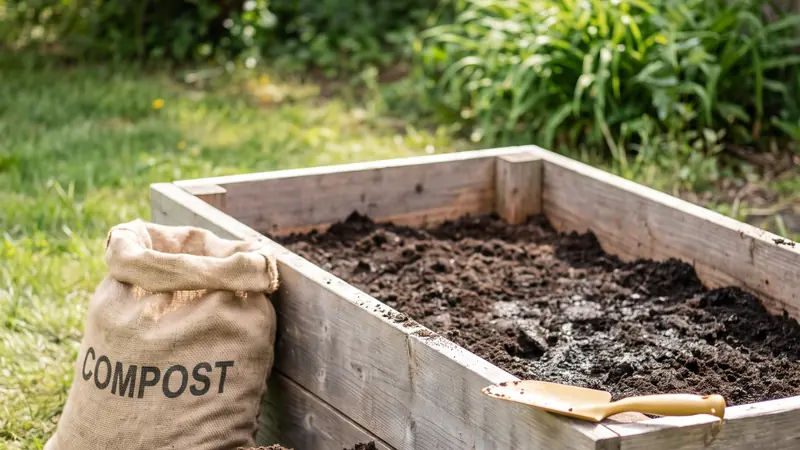
Oregon State University Extension notes that one 1 cu ft bag covers about 12 sq ft at 1 inch deep. Covering 1,000 sq ft of lawn at a quarter inch takes about 21 cubic feet. A 4 × 8 ft bed (32 sq ft) at 3 inches takes 8 cubic feet.
How to use the compost calculator
The compost calculator turns an area and a depth into cubic feet, cubic yards and bags. The "How we calculated this" panel shows each step, and the PDF report keeps them for your supplier.
Step 1: Enter the area to cover
Type the length and width in feet, or the square feet if you know them. For odd shapes, add the pieces in the square footage calculator first.
Step 2: Pick the job and the depth
Choose lawn top-dressing, a new lawn, a garden bed or a new bed. The tool sets the depth from the extension guidance, and you can type your own.
Step 3: Choose bags or bulk
Enter the bag size and price, and the bulk price per cubic yard. The result compares both and marks the cheaper option.
Compost depth by job
Depths from Oregon State University Extension.
| Job | Compost depth |
|---|---|
| Top-dress an existing lawn | ¼–½ in |
| New lawn, mixed into the soil | 1–2 in |
| Established vegetable bed, each year | ¼–1 in |
| New vegetable bed, mixed into the top 8–12 in | 3–4 in |
| New landscape bed, mixed into the top 6–8 in | 3–4 in |
McGill Compost gives the same rule of thumb: a quarter to half inch on top of the lawn, and 1 to 2 inches worked into the top 6 to 8 inches of soil for gardens and new lawns.
Rake it in
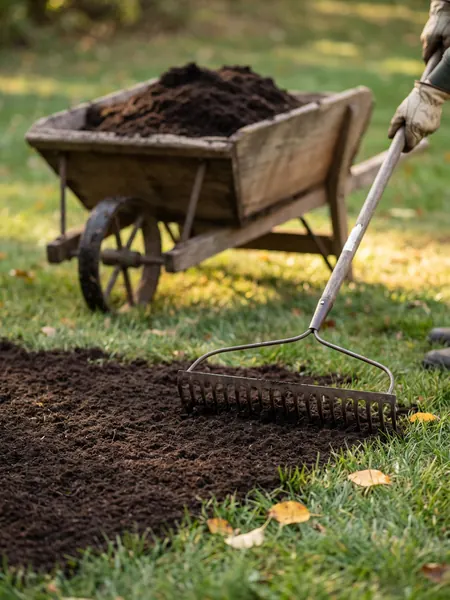
On a lawn, rake compost down into the grass until the blades show through. Spreading right after core aeration lets it fall into the holes.
How much does a bag or a yard of compost cover?
One cubic yard covers about 324 sq ft at 1 inch deep, and one cubic foot covers 12 sq ft. The compost calculator does this sum for any area. The table gives the volume by depth for two common areas, so you can check an example against your own numbers.
| Depth | 100 sq ft | 1,000 sq ft |
|---|---|---|
| 0.25 in | 2.1 cu ft · 0.08 yd³ | 21 cu ft · 0.77 yd³ |
| 0.5 in | 4.2 cu ft · 0.15 yd³ | 42 cu ft · 1.54 yd³ |
| 1 in | 8.3 cu ft · 0.31 yd³ | 83 cu ft · 3.09 yd³ |
| 2 in | 16.7 cu ft · 0.62 yd³ | 167 cu ft · 6.17 yd³ |
| 3 in | 25.0 cu ft · 0.93 yd³ | 250 cu ft · 9.26 yd³ |
Building a raised bed? Get the full topsoil and compost recipe.
Raised bed calculatorCompost for lawns
Enter the lawn size in the compost calculator and pick the lawn depth.
For an established lawn, apply a thin quarter to half inch layer before or after aerating, and rake it in. For a new lawn, work 1 to 2 inches of compost into the soil as you prepare it, before seeding or sodding. Both figures come from Oregon State University Extension.
Compost for vegetable gardens and raised beds
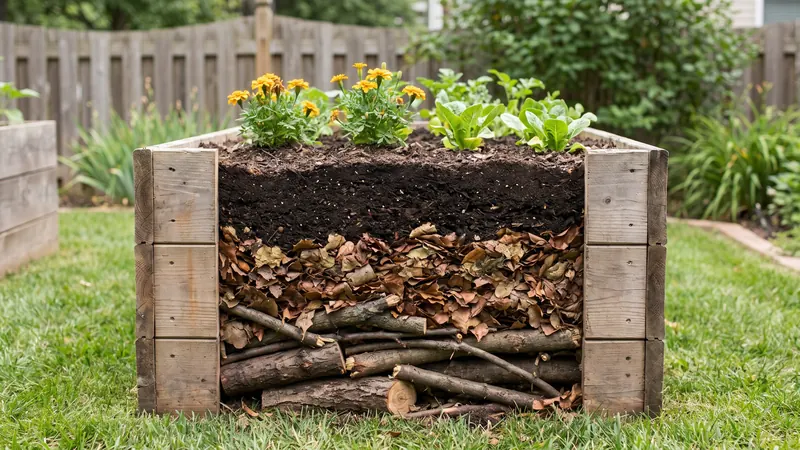
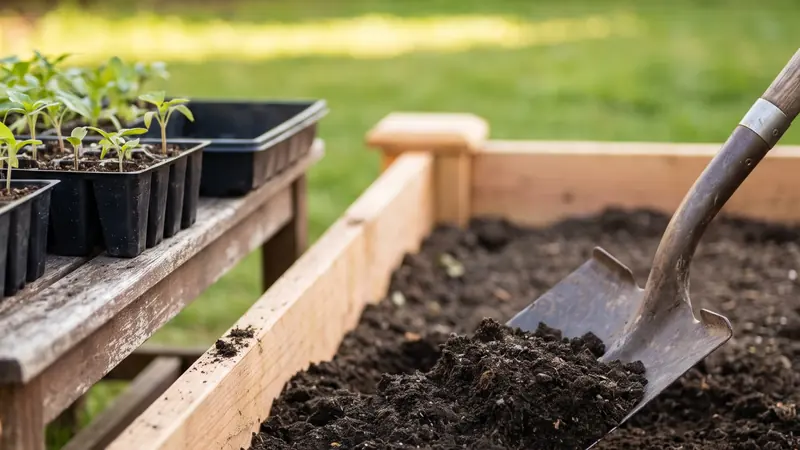
Established vegetable beds take a quarter to 1 inch of compost on the surface each year. New beds take 3 to 4 inches mixed into the top 8 to 12 inches. In raised beds, add up to 25 percent compost by volume, never compost alone.
The soil mix, the depth your crops need, and what can go in the bottom.
Read the guideChoosing good compost
OSU Extension says finished compost looks like dark topsoil, with a light, crumbly structure, and passes a 3/8 inch screen. It should smell earthy, like forest soil. Avoid compost that smells like ammonia or sulfur.
Compost made from mushroom or manure sources can have high soluble salts that harm seeds and sensitive plants. Too much compost can also leach nutrients into surface and ground water.
How much does compost weigh?
Omni Calculator says a 1 cubic foot bag typically weighs about 40 lb, which is roughly 1,080 lb per cubic yard. Compost is lighter than topsoil, and wet compost weighs more.
Compost cost
Enter your bag price and your bulk price per cubic yard. The compost calculator multiplies each by the amount you need. Bags suit small beds. Past about one cubic yard, bulk is usually cheaper, before delivery.
Common compost mistakes
- Too thick on a lawn. More than half an inch can smother the grass. Rake it in.
- Compost alone in a raised bed. Mix it with soil, at up to 25 percent by volume.
- Immature compost. A sour or ammonia smell means it is not finished.
- Ordering by the bag for a big job. Bulk is cheaper past about a cubic yard.
Before you order compost
Measure the area, pick the depth for the job, and let the compost calculator turn it into cubic feet, yards and bags. Check the compost is finished, compare bag and bulk prices with delivery, and download the PDF report for your supplier.
Frequently asked questions
How thick should I spread compost on my lawn?
Oregon State University Extension recommends spreading compost one-quarter to one-half inch deep across an existing lawn, and 1 to 2 inches when you prepare the soil for a new lawn.
How much compost does a new garden bed need?
OSU Extension suggests a 3 to 4 inch layer of compost on the surface of a new vegetable bed, mixed into the top 8 to 12 inches of soil. For a new landscape area, it mixes 3 to 4 inches into the top 6 to 8 inches.
How much does a bag of compost cover?
A 1 cubic foot bag covers about 12 square feet at 1 inch deep, or 48 square feet at a quarter inch.
How much compost do I need for 1,000 sq ft of lawn?
At a quarter inch, about 21 cubic feet, or 0.77 cubic yards. At half an inch, about 42 cubic feet, or 1.5 cubic yards. Spread it before or after aeration, as McGill Compost suggests.
How accurate is the compost calculator?
It gives the exact volume for the area and depth you enter. Compost settles a little, so round up when you are between bag sizes. The depth is the number that matters most, so pick it for the job.
How much compost should go in a raised bed?
OSU Extension says not to fill raised beds with compost alone. Add up to 25 percent compost by volume to the fill. In a 4 × 8 ft bed 12 inches deep, that is up to 8 of the 32 cubic feet.
How much does a cubic foot of compost weigh?
Omni Calculator says a 1 cubic foot bag typically weighs about 40 lb. That works out to roughly 1,080 lb per cubic yard, and the figure varies with moisture.
Sources