On this page
- How many plants do I need?
- How to use the plant spacing calculator
- Plants per square foot at common spacings
- Square vs triangular spacing
- Ground cover, perennials and shrubs
- Plant spacing for vegetables and square foot gardening
- How many plants for a hedge?
- Why plant spacing matters
- Common plant spacing mistakes
- Before you order plants
- Frequently asked questions
How many plants do I need?
Divide the bed's area by the space each plant takes up. In a square grid, each plant takes spacing × spacing. In offset (triangular) rows, it takes a bit less. A 10 × 6 ft bed at 12 inch spacing needs 60 plants in a grid and 70 in offset rows.
Offset rows use spacing² × 0.866 per plant, so they fit about 15% more plants in the same bed. Illinois Extension recommends a staggered or diamond pattern for ground covers.
How to use the plant spacing calculator
The plant spacing calculator turns a bed size and a spacing into a plant count. The "How we calculated this" panel shows each step, and the PDF report keeps the numbers for your nursery order.
Step 1: Enter the bed size
Type the bed dimensions, the length and width in feet, or the square feet if you know them. For curved beds, measure the shape in the square footage calculator first.
Step 2: Enter the spacing from the plant tag
Spacing is measured from the center of one plant to the center of the next. The tag or catalog gives it for each variety, based on the mature width.
Step 3: Pick a square grid or offset rows
Square grids are easy to lay out. Offset rows pack more plants into the same bed and cover the soil sooner, which suits ground covers and mass plantings.
Step 4: Add price and flats
Enter the price per plant and the plants per flat to see the cost and the number of flats to order.
Plants per square foot at common spacings
Plants per square foot and per 100 sq ft, for a square grid and for offset rows.
| Spacing | Per sq ft (grid) | Per sq ft (offset) | Per 100 sq ft (grid / offset) |
|---|---|---|---|
| 6 in | 4.00 | 4.62 | 400 / 462 |
| 8 in | 2.25 | 2.60 | 225 / 260 |
| 12 in | 1.00 | 1.15 | 100 / 116 |
| 18 in | 0.44 | 0.51 | 45 / 52 |
| 24 in | 0.25 | 0.29 | 25 / 29 |
| 36 in | 0.11 | 0.13 | 12 / 13 |
The grid column matches the Illinois Extension ground cover table: 400 plants per 100 sq ft at 6 inches, 100 at 12 inches and 45 at 18 inches.
Spacing comes from the tag
Use the spacing printed on the plant tag or catalog. It reflects the mature width. Planting closer fills in faster, but you pay for more plants and thin them later.
Square vs triangular spacing
A square grid puts each plant at the corner of a square, with the same gap between rows and within rows. Triangular spacing shifts every second row by half a space, so each plant has six equal neighbors.
Kentucky State University describes this hexagonal pattern: every plant is the same distance from its six nearest neighbors. The row gap is spacing × 0.866, the height of an equilateral triangle.
| Spacing | Gap between offset rows |
|---|---|
| 6 in | 5.2 in |
| 8 in | 6.9 in |
| 12 in | 10.4 in |
| 18 in | 15.6 in |
| 24 in | 20.8 in |
| 36 in | 31.2 in |
Why the area per plant matters
The area a plant gets grows with the square of the spacing. Kentucky State University notes that plants 13 inches apart in a hexagonal lattice each have about a square foot, while plants 26 inches apart each get four square feet. Doubling the spacing quarters the plant count.
Need the bed's area first? Measure curves and odd shapes, then come back.
Square footage calculatorGround cover, perennials and shrubs
Illinois Extension says to space faster growing ground covers further apart than slow growing ones. Slow spreaders go closer, which costs more but covers the soil sooner.
For perennials and shrubs, use the mature width on the tag. A shrub planted at its mature width touches its neighbors once it is grown, and gives a continuous mass.
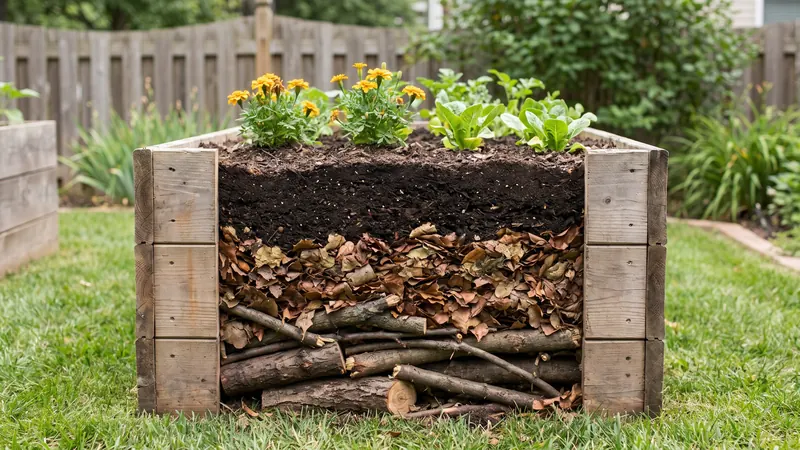
The soil mix, the depth your crops need, and what can go in the bottom.
Read the guidePlant spacing for vegetables and square foot gardening
Square foot gardening divides a bed into 1 × 1 ft squares and plants a set number in each, based on the crop's size. The Old Farmer's Almanac lists these counts per square. Enter the spacing from the seed packet and the calculator gives the same numbers.
| Crop | Plants per 1 × 1 ft square |
|---|---|
| Carrots, radishes | 16 |
| Bush beans | 9 |
| Lettuce, spinach (leafy greens) | 4–6 |
| Marigold, calendula | 4 |
| Small peppers | 1–2 |
| Large peppers, tomatoes, zucchini | 1 |
The Almanac says any raised bed 4 feet wide works, because you can reach every square without stepping into the bed. For soil volume, use the raised bed soil calculator.
How many plants for a hedge?
A hedge is a single row, so count along its length. Plants per foot is 12 divided by the spacing in inches, and you add one for the plant at the end.
A 30 ft hedge at 36 inch spacing takes 30 × 12 ÷ 36 + 1 = 11 plants. For a thicker hedge, plant two staggered rows with a row gap of spacing × 0.866.
Why plant spacing matters
The Old Farmer's Almanac says correct spacing keeps a bed tidy and reduces competition for nutrients. Plants that are too close compete for water and root space, and their shade and dense foliage dry slowly, which suits pests and fungal disease.
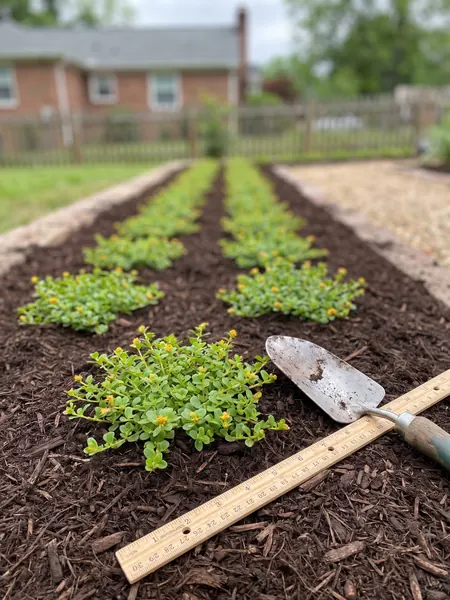
Plants set too far apart leave bare soil showing for longer, and in the first year you pay for it in weeding.
Allow each plant room for its roots and its fully grown width, and plan the pattern around that recommended spacing. It is a balance between cost and speed, so use this resource to try a few spacings before you order flowers, perennials or shrubs.
Common plant spacing mistakes
- Using the nursery pot size. Space by the mature width on the tag, not the size of the pot.
- Measuring edge to edge. Spacing is center to center.
- Ignoring the pattern. Offset rows at the same spacing take about 15% more plants than a grid, so pick the pattern before you order.
- Buying exactly the count. Add a few spares for first-season losses.
Before you order plants
Measure the bed, take the spacing from the tag, pick a square grid or offset rows, and let the plant spacing calculator give the count. Add a few spares, compare the price per plant with the price per flat, and download the PDF report for your nursery.
Frequently asked questions
What is the difference between square and triangular plant spacing?
In a square grid every plant sits at the corner of a square. In triangular (offset) spacing each row shifts by half a space, so plants sit at the corners of triangles. Offset rows fit about 15% more plants at the same spacing and fill in more evenly.
How far apart should I plant ground cover?
Illinois Extension says spacing depends on the plant's habit, its growth rate, the cost and how fast you need the area covered, and that faster growing ground covers go further apart. Start from the spacing on the plant tag.
How many plants per square foot at 12 inch spacing?
One plant per square foot in a square grid, and about 1.15 in triangular spacing.
How many plants do I need for 100 square feet?
In a square grid, 400 plants at 6 inch spacing, 100 at 12 inches and 45 at 18 inches. Offset rows at the same spacing take about 15% more plants: 462, 116 and 52.
How accurate is the plant spacing calculator?
It gives the exact count for the area and spacing you enter, rounded up. Real beds have curved edges and gaps, so buy a few spares for losses in the first season.
Is spacing measured from the center of the plant?
Yes. Plant spacing is the distance from the center of one plant to the center of the next, not the gap between them. A 12 inch spacing puts plant centers 12 inches apart.
How do I figure out how many plants I need for a hedge?
Multiply the hedge length in feet by 12, divide by the spacing in inches, and add one for the plant at the end. A 30 ft hedge at 36 inch spacing takes 11 plants.
Sources