On this page
- How much gravel do I need?
- How to use the gravel calculator
- Gravel depth by project
- Gravel tons by area and depth
- Cubic yards vs tons of gravel
- Types of gravel compared
- Bags or bulk gravel?
- Estimating gravel cost
- Calculate gravel for any shape
- How much gravel for a driveway?
- Waste and compaction factor
- Gravel in metric units
- Gravel, sand and other aggregates
- Before you order gravel
- Frequently asked questions
How much gravel do I need?
Work out the volume in cubic yards (area × depth ÷ 27), then multiply by the stone's weight per yard to get the tons a quarry quotes. For 200 sq ft at 4 inches, that is 2.47 yd³, or about 3.5 tons.
Gravel is sold by weight but you plan it by volume, so there is one more step than for mulch or soil. That step is the density of the stone, and it changes with the type of gravel, its size and how wet it is.
Worked example: a 20 × 10 ft area at 4 inches is 200 sq ft × 0.33 ft = 66.7 cubic feet. Divide by 27 for 2.47 cubic yards, then multiply by 1.4 for about 3.5 tons of angular gravel.
How to use the gravel calculator
The gravel calculator runs the same estimate a supplier does, and shows each step in "How we calculated this" and in the PDF report. Four inputs decide the result.
Step 1: Measure the length and width
Take the measurement of each dimension in feet and enter the length and width, or the square footage if you already know it. Irregular shapes go through the square footage calculator, which sends the total back here.
Step 2: Choose the depth
Depth changes the order more than anything else: doubling it doubles the tons, and every extra inch deep adds about 0.31 yd³ per 100 sq ft. Use the depth for the job in the table below, measured after compaction for bases and driveways.
Step 3: Pick the gravel type
Each type has its own material density, its weight per cubic yard. Crushed stone is the default at 1.4 tons; pea gravel and river rock run heavier, decorative landscape gravel a little lighter. Your supplier's figure beats ours.
Step 4: Compare bulk and bags
Enter the price per ton and per bag. The calculator estimates the cost of both, marks the cheaper one, and adds everything to the downloadable report.
Gravel depth by project
Each application has its own gravel layer. Too thin and the ground shows through or ruts; too thick and it feels unstable underfoot. These are common depths; your supplier or contractor may adjust them for your soil.
| Project | Typical depth | Gravel |
|---|---|---|
| Garden path or walkway | 2 in | Pea gravel, decomposed granite, small angular gravel |
| Patio or decorative bed | 2–3 in | Pea gravel, landscape gravel, river rock |
| Base under pavers or a shed | 4 in compacted | Base gravel (ICPI: 4 in minimum for patios) |
| Driveway | 4–6 in or more, in layers | Crusher run below, #57 on top |
| Drainage trench | Fill the trench | Clean angular gravel or river rock |
Gravel needs an edge
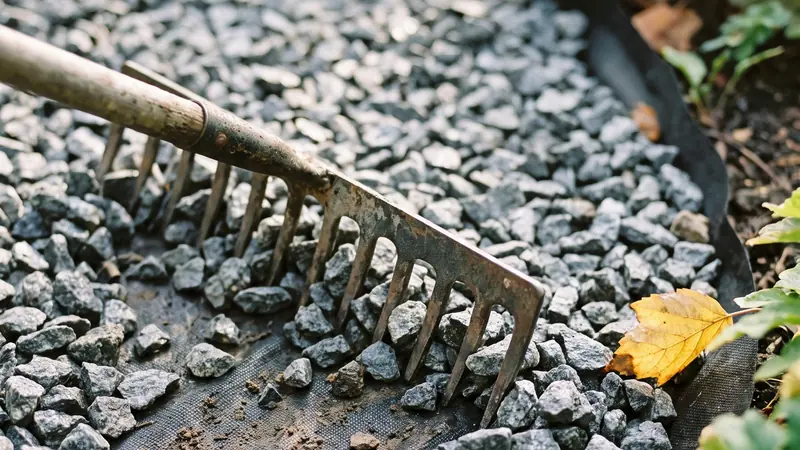
Without edging, gravel drifts into lawns and beds within a season. Put in steel, aluminum or plastic edging before you spread it, and lay landscape fabric on soft ground.
Gravel tons by area and depth
Coverage at about 1.4 t/yd³ (angular gravel), before any compaction allowance.
| Area (sq ft) | 2 in | 3 in | 4 in | 6 in | Cubic yards (4 in) |
|---|---|---|---|---|---|
| 50 | 0.43 t | 0.65 t | 0.86 t | 1.30 t | 0.62 yd³ |
| 100 | 0.86 t | 1.30 t | 1.73 t | 2.59 t | 1.23 yd³ |
| 200 | 1.73 t | 2.59 t | 3.46 t | 5.19 t | 2.47 yd³ |
| 500 | 4.32 t | 6.48 t | 8.64 t | 12.96 t | 6.17 yd³ |
| 1,000 | 8.64 t | 12.96 t | 17.28 t | 25.93 t | 12.35 yd³ |
Cubic yards vs tons of gravel
Quarries price gravel by the ton, landscape yards often by the cubic yard. To compare quotes, convert both to the same unit with the stone's density: tons = cubic yards × tons per yard.
In pounds, a US ton is 2,000 lbs, so crushed stone at 1.4 tons per cubic yard weighs about 2,800 lbs per yard. Metric suppliers quote the tonne (1,000 kg), which is 1.1 US tons.
| Gravel type | Weight per cubic yard (Stone Center) | 1 ton ≈ |
|---|---|---|
| Crushed stone | 1.35–1.7 tons | 0.6–0.75 yd³ |
| Pea gravel | 1.4–1.6 tons | 0.63–0.71 yd³ |
| River rock | 1.4–1.75 tons | 0.57–0.71 yd³ |
| Landscape gravel | 1.25–1.35 tons | 0.74–0.8 yd³ |
Material that will be compacted, such as a base or a driveway layer, shrinks when it is rolled or tamped. Order a little more than the finished volume; the crushed stone calculator adds that compaction allowance for you.
Types of gravel compared
Crushed stone
Angular construction aggregate, often crushed limestone or granite, that locks together when compacted. The pick for driveways, paver bases and anything that carries weight.
Pea gravel
Smooth, rounded ¼ to ½ in pebbles for walkways, patios and play areas. It doesn't compact, so it needs edging. See the pea gravel calculator.
Decomposed granite
Fine particles that pack into a firm, natural-looking surface for paths and patios.
River rock
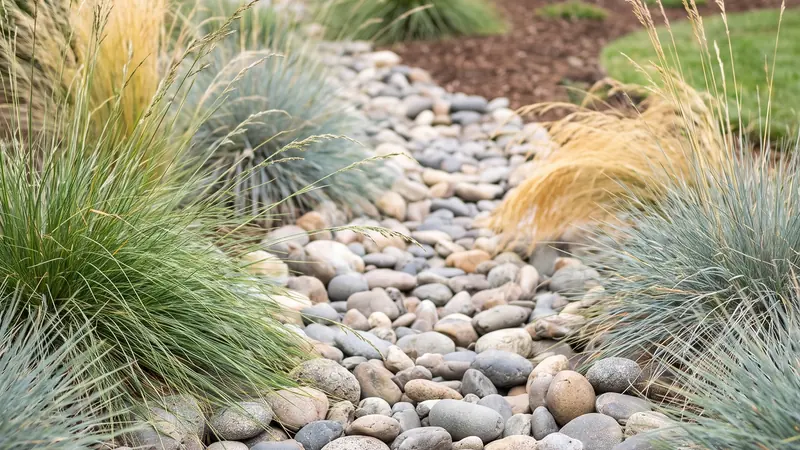
Larger rounded stones for drainage, dry creek beds and borders. Too rolly for foot traffic. See the river rock calculator.
Bags or bulk gravel?
A 0.5 cu ft bag holds 1/54 of a cubic yard, so bags add up fast: one ton is about 38 bags. Bags suit small jobs and places a truck can't reach. For anything over half a ton, a bulk load is cheaper per ton, though most suppliers set a minimum order and charge for delivery.
Estimating gravel cost
Gravel prices vary by region, type and distance from the quarry, so the calculator uses the prices you enter rather than guessing. Multiply the tons by the price per ton, add delivery, and compare with the bagged total the calculator shows.
Calculate gravel for any shape
The calculator needs the area in square feet. For simple shapes, calculate it yourself with these formulas, then enter the total in "I know the sq ft" mode.
Rectangle or square
Length × width. A 30 × 12 ft rectangular path is 360 sq ft; at 2 inches that is 2.22 yd³, or about 3.1 t.
Circle
π × radius². A round fire pit area 14 ft in diameter has a radius of 7 ft: 3.1416 × 49 = 154 sq ft. At 3 inches, the gravel needed is 1.43 yd³, about 2 tons.
Triangle and odd shapes
Base × height ÷ 2, or Heron's formula when you only know the three sides. For L-shaped or curved beds, split the area into pieces in the square footage calculator; it adds them up and sends the total back to this page.
How much gravel for a driveway?
A gravel driveway is the biggest gravel job most homeowners order. A single-car drive 12 ft wide and 60 ft long covers 720 sq ft. With a 4 inch base and a 2 inch top layer, that is 6 inches in total: 13.3 yd³, about 18.7 t.
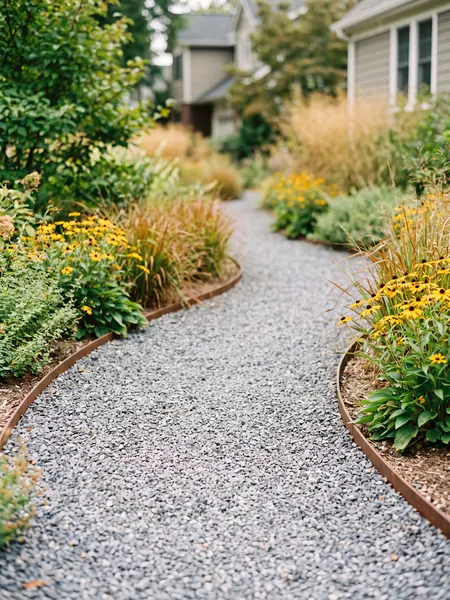
Driveways are built in layers, coarse stone below and finer stone on top, and each layer is compacted. The gravel driveway calculator splits the tons by layer and adds truckloads; our guide to the best gravel for a driveway explains which stone goes where. A gravel road follows the same principle at a larger scale.
Waste and compaction factor
Two things make a real order larger than the geometry. Compaction: loose gravel shrinks when rolled or tamped, so a compacted base needs more than its finished volume. Waste: uneven ground, spills and stone pressed into soft soil all eat material.
For decorative gravel spread loose, rounding up is usually enough. For bases and driveways, many suppliers suggest ordering extra; ask yours for the factor they use, or use the crushed stone calculator, which lets you set it.
Gravel in metric units
Suppliers outside the US, and some product sheets, use cubic meters and metric tonnes. One cubic yard is 0.765 cubic meters, and one US (short) ton is 0.907 metric tonnes. The calculator shows cubic meters in the "How we calculated this" steps whenever you need them.
Gravel, sand and other aggregates
Gravel, sand and crushed stone are all aggregate, sorted by particle size. Sand is the fine end: dry sand weighs about 1.35 tons per cubic yard and goes under pavers, into sandboxes and into concrete. Gravel is the coarse end, used for drainage, paths, bases and driveways. If your project needs sand, use the sand calculator, which works in tons, yards and 50 lb bags.
Before you order gravel
Measure the area, choose the depth and the gravel type, and let the gravel calculator turn them into the gravel volume, tons and bags. The result is an approximate quantity for landscaping and construction planning, not a delivery ticket. Ask the quarry for its weight per yard and delivery minimum, add a little for compaction, and download the PDF report to take with you.
Frequently asked questions
How much gravel do I need?
Multiply the area in square feet by the depth in inches, divide by 12 for cubic feet and by 27 for cubic yards, then multiply by the stone's weight per yard (about 1.4 tons for crushed stone). A 20 × 10 ft area at 4 inches needs 2.47 yd³, about 3.5 tons.
How much does a cubic yard of gravel weigh?
Stone Center lists crushed stone at 1.35 to 1.7 tons per cubic yard, pea gravel at 1.4 to 1.6 tons and river rock at 1.4 to 1.75 tons. Wet stone sits at the heavy end, which is why bulk gravel is sold by the ton.
How much area does a ton of gravel cover?
At 2 inches deep, one ton of gravel (at 1.4 t/yd³) covers roughly 115 sq ft. At 4 inches it covers about 58 sq ft, and at 6 inches about 38 sq ft.
How deep should gravel be?
About 2 inches for a path, 3 inches for a patio or decorative bed, 4 inches for a compacted base, and 4 to 6 inches or more for a driveway, usually in layers.
Should I buy gravel in bags or in bulk?
Bags make sense under about half a ton, for pots, small borders and repairs. For a path, patio base or driveway, bulk delivery by the ton is far cheaper per unit.
How accurate is the gravel calculator?
The math is exact for your measurements. The real-world result depends on the stone's actual weight per yard, how much it compacts and how level the ground is, so confirm the density with your supplier and round up.
Sources