On this page
- How much sand do I need?
- How to use the sand calculator
- Types of sand and what each is for
- Sand needed by area and depth
- How much sand weighs
- Common sand jobs
- Sand grain size
- Sand vs gravel and topsoil
- Planning a sand delivery
- Bags or bulk sand?
- Estimating sand cost
- Before you order sand
- Frequently asked questions
How much sand do I need?
Work out the volume first (area × depth ÷ 27 = cubic yards), then convert it to tons with the sand's weight: about 1.35 tons per cubic yard dry and 1.62 tons wet. A 1 inch bed under a 120 sq ft patio needs 0.37 cubic yards, about half a ton.
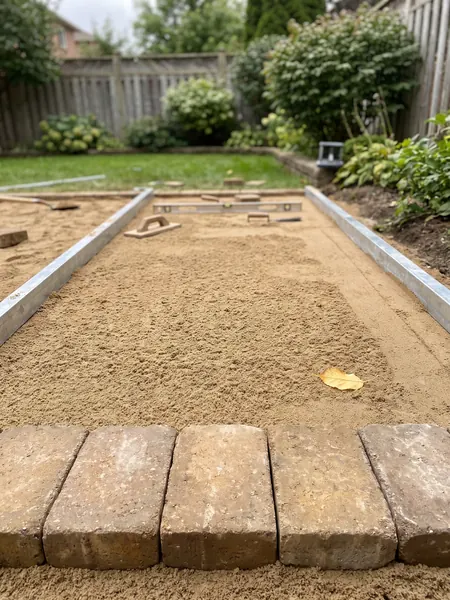
Sand is the finest construction aggregate, made of small grains of rock and minerals, finer than gravel and coarser than silt. It is sold by the ton, by the cubic yard or in 50 lb bags. Because wet sand weighs about 20% more than dry sand for the same volume, the moisture changes how much you get per ton.
Worked example: a 12 × 10 ft paver patio needs a 1 inch sand bed. 120 sq ft × 1 in ÷ 12 = 10 cubic feet, or 0.37 cubic yards. At 1.35 tons per yard, that's 0.5 tons, or 20 bags of 50 lb.
How to use the sand calculator
The sand calculator estimates the volume, the weight and the bags for any rectangular area or known square footage, in four steps shown in the result and the PDF report.
Step 1: Take the measurements
Measure the length and width of the area in feet, or enter the square feet. For a round sandbox, use π × radius² with half the diameter; for an odd shape, use the square footage calculator.
Step 2: Choose the depth for the job
One inch for paver bedding, 2 to 4 inches for leveling or a base, 6 to 12 inches for a sandbox. Every inch deep adds about 0.31 cubic yards per 100 sq ft.
Step 3: Pick dry or wet sand
Sand density depends on moisture: 1.35 tons per cubic yard dry, 1.62 tons wet. If your supplier stores sand outdoors, a load after rain is closer to wet.
Step 4: Compare bulk and bags
Enter the price per ton and per 50 lb bag. The calculator shows the total cost of each and marks the cheaper one.
Types of sand and what each is for
Using the right sand type matters as much as the quantity. The common types at a landscape or building supply yard:
| Sand type | Grain | Use it for |
|---|---|---|
| Concrete sand (ASTM C33) | Coarse, washed | Paver bedding (ICPI), concrete mixes, drainage |
| Masonry sand | Fine, uniform | Mortar for brick and block; not paver bedding |
| Play sand | Fine, washed and screened | Sandboxes and play areas |
| Fill sand | Unwashed, mixed | Filling holes and raising grade under a base |
| Polymeric sand | Fine sand with binder | Paver joints; see the polymeric sand calculator |
| Silica sand | Fine, high quartz | Specialty uses (filters, finishes) |
For pavers, ICPI Tech Spec 2 is clear: bedding sand is concrete sand screeded to a nominal 1 inch, and masonry sand, limestone screenings or stone dust should not be used. The paver sand calculator handles that layer, and the polymeric sand calculator the joints.
Sand needed by area and depth
Dry sand at 1.35 tons per cubic yard. Bags are 50 lb, at a 1 inch depth, rounded up.
| Area (sq ft) | 1 in | 2 in | 4 in | 12 in | 50 lb bags (1 in) |
|---|---|---|---|---|---|
| 50 | 0.21 t | 0.42 t | 0.83 t | 2.50 t | 9 |
| 100 | 0.42 t | 0.83 t | 1.67 t | 5.00 t | 17 |
| 200 | 0.83 t | 1.67 t | 3.33 t | 10.00 t | 34 |
| 500 | 2.08 t | 4.17 t | 8.33 t | 25.00 t | 84 |
| 1,000 | 4.17 t | 8.33 t | 16.67 t | 50.00 t | 167 |
How much sand weighs
Sand weight changes with the type of sand and its moisture. The Calculator Site gives these figures for a cubic yard:
| Condition | Pounds per cubic yard | Tons per cubic yard | 50 lb bags per cubic yard |
|---|---|---|---|
| Dry sand | 2,700 lb | 1.35 | 54 |
| Wet sand | 3,240 lb | 1.62 | 65 |
In metric units, 1.35 tons per cubic yard is about 1,600 kg per cubic meter, or 1.6 tonnes per m³. One cubic yard equals 0.765 cubic meters, if your supplier quotes by the meter.
Common sand jobs
Paver bedding
Concrete sand screeded about 1 inch thick over a compacted base, per ICPI. Not stone dust, not play sand.
Sandbox
Washed play sand, 6 to 12 inches deep depending on the box and how much digging happens.
Leveling a lawn
Thin top-dressing to fill low spots. Many homeowners use a sand and soil or compost mix rather than pure sand.
Mortar and concrete
Masonry sand for mortar, concrete sand for mixing concrete. Bagged mix is often simpler: see the concrete calculator.
Sand grain size
Sand grains run from about 0.06 mm to 2 mm; anything coarser is gravel, anything finer is silt. The size decides the job. Coarse, angular concrete sand locks together and drains, which is why it goes under pavers and into concrete. Finer, rounded masonry and play sand packs smoothly and feels soft, which suits mortar and sandboxes but not a paver bed.
River sand is naturally rounded by water; manufactured sand is crushed from rock such as granite or limestone and is more angular. Ask your supplier which one they stock when the use matters.
Sand vs gravel and topsoil
Sand, gravel and topsoil are all bulk construction material sold by the ton or the yard, and people often mix them up. Gravel is coarser and carries weight: it's the base for a driveway or a patio. Sand is finer: it levels, beds and fills joints, but on its own it shifts under load. Topsoil contains organic matter and is for growing plants and lawns, not for building on.
If your project needs one of the others, use the matching tool: the gravel calculator for bases and paths, the topsoil calculator for leveling a lawn or filling a garden, and the mulch calculator for planted beds.
Planning a sand delivery
- Check the truck access. A dump truck needs a clear path and a firm spot to tip. Put a tarp down on the driveway to keep it clean.
- Keep it covered. Rain adds water weight and washes fine sand away; a tarp over the pile keeps it dry and in place.
- Order a little extra. Screeding, spills and uneven ground use more sand than the geometry. Rounding up the quantity avoids a second delivery fee.
Bags or bulk sand?
A 50 lb bag holds about 0.5 cubic feet of dry sand, so bags add up fast: a ton is 40 bags. Bags suit small jobs like topping up joints or a small sandbox. Past half a ton, bulk sand delivered by the ton or cubic yard costs far less per unit; ask about the minimum order and the delivery fee, and have a tarp ready.
Estimating sand cost
The price of sand depends on the type (washed and screened sand costs more than fill sand), the region and delivery. The calculator uses the price per ton and per bag you enter, so the estimate matches your local supplier.
Before you order sand
Measure the area, choose the depth and whether the sand is dry or wet, and the sand calculator gives you the tons, cubic yards and 50 lb bags. Pick the right sand type for the job, confirm its weight with your supplier, and take the PDF report with you.
Frequently asked questions
How much sand do I need?
Multiply the area in square feet by the depth in inches, divide by 12 and by 27 for cubic yards, then multiply by about 1.35 tons per yard for dry sand. A 12 × 10 ft patio bed at 1 inch needs 0.37 cubic yards, about half a ton, or 20 bags of 50 lb.
How much does a cubic yard of sand weigh?
Dry sand weighs about 2,700 lb (1.35 tons) per cubic yard, and wet sand about 3,240 lb (1.62 tons), according to The Calculator Site. Suppliers weigh it as it sits in their yard, so ask how wet it is.
How much sand goes under pavers?
ICPI Tech Spec 2 says bedding sand should be spread and screeded to an uncompacted nominal 1 inch over the compacted base. It should be concrete sand (ASTM C33), not masonry sand or stone dust.
How many 50 lb bags of sand are in a ton?
A ton is 2,000 lb, so it takes 40 bags of 50 lb. One cubic yard of dry sand (about 1.35 tons) is roughly 54 bags.
How much sand for a sandbox?
Most sandboxes are filled 6 to 12 inches deep. A 6 × 6 ft box at 12 inches holds 36 cubic feet: 1.33 cubic yards, about 1.8 tons of dry play sand or 72 bags of 50 lb.
How accurate is the sand calculator?
The volume is exact for your measurements. The weight depends on the sand type and its moisture, so choose dry or wet and confirm the weight with your supplier before you order by the ton.
Sources