On this page
- How much flagstone do I need?
- How to use the flagstone calculator
- Flagstone coverage per ton by thickness
- Random flagstone vs square-cut flagstone
- The base, sand and joints under and between the stone
- Joints and spacing
- Worked examples
- Flagstone types and weight
- Flagstone for walls and veneer
- How a flagstone patio goes together
- Flagstone patio or stepping stones?
- Flagstone cost
- Common flagstone ordering mistakes
- Before you order flagstone
- Frequently asked questions
How much flagstone do I need?
Flagstone is sold by the ton, and a ton covers less area the thicker the stone. Divide the area by the coverage per ton for your thickness, then add about 10 percent for cuts and breakage.
Acme's own example: a 15 × 15 ft patio (225 sq ft) in 1¾ inch stone at 120 sq ft per ton takes 1.88 tons, before waste. With 10% extra that is 2.07 tons.
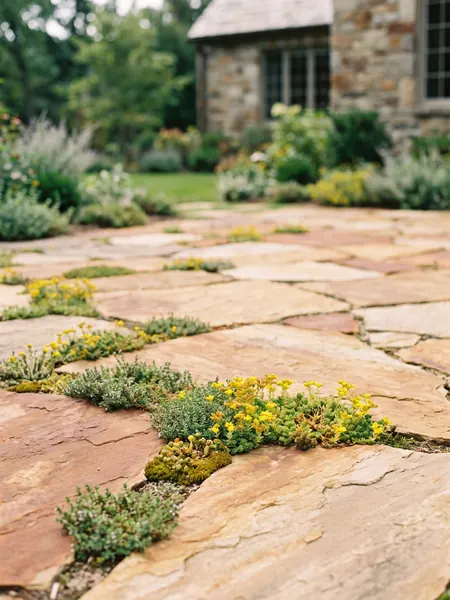
Flagstone is flat stone split along its bedding planes, usually a sandstone made of quartz and feldspar. It is used for patios, walkways, steps and flooring. Suppliers also sell bluestone, limestone and other flat stone in the same way.
How to use the flagstone calculator
The flagstone calculator divides your area by the coverage per ton for the stone you pick. The "How we calculated this" panel shows each step, and the PDF report keeps them for your stone yard.
Step 1: Measure the patio in square feet
Multiply length by width. For curves or an L shape, break the patio into rectangles and add them up in the square footage calculator.
Step 2: Pick the stone thickness
Choose thin, regular, heavy or patio stone. Each one uses the mid-point of Acme's coverage range. If your yard quotes a different figure, use theirs.
Step 3: Add waste and read the order
Set 5, 10 or 15 percent for fitting. You get tons, pallets and the weight. Enter your price per ton to see the stone cost.
Flagstone coverage per ton by thickness
From Acme Sand & Gravel's flagstone sheet:
| Flagstone | Thickness range | Coverage per ton |
|---|---|---|
| Thin, 1¼ in minus | ¾–1¼ in | 140–160 sq ft |
| Regular, 1¾ in minus | 1–1¾ in | 115–125 sq ft |
| Heavy, 2 in | 1½–2¼ in | 80–90 sq ft |
| Patio stone | 1–3 in | 70–140 sq ft |
Select Stone Supply gives the same idea: one ton of 2 inch flagstone covers about 80 sq ft, so a 25 × 30 ft patio (750 sq ft) takes about 9.5 tons. Thin patio-gauge stone sits toward the high end of the range, and thick standup stone toward the low end.
Sand set or mortar set
Acme recommends about 1¾ inch stone for a sand-set patio and 1¼ inch stone set in a concrete base. Thin stone laid on sand can crack under load.
Random flagstone vs square-cut flagstone
Random flagstone
Irregular pieces sold by the ton. Use the coverage per ton for the thickness, plus about 10% for fitting and breakage.
Square-cut flagstone
Cut to size and sold by the square foot. Order the patio area plus waste. No tonnage conversion is needed.
The base, sand and joints under and between the stone
The stone is only part of the order. A dry-laid flagstone patio is a layered build, and the material under the stone is often a bigger volume than the stone itself.
| Layer | Typical depth | Material |
|---|---|---|
| Compacted base | 4 in (4 to 6 in per Hardscape Genius) | Class II road base or crushed stone |
| Bedding course | 1 in | Bedding sand |
| Flagstone | 1 to 2 in | Flagstone |
| Joints | Full joint depth | Sand, decomposed granite or pea gravel |
Earth Stone Rock's rule of thumb: a 100 sq ft patio needs about 1.2 cubic yards of base and 0.3 cubic yards of bedding sand on top of the stone tonnage. Work out the base with the paver base calculator and the sand with the paver sand calculator.
Joints and spacing
Flagstone is laid with gaps that you fill later. Wider joints mean fewer stones cover the same footprint, so a relaxed layout stretches the order a little further than tight joints.
Fill the joints with sand, decomposed granite or pea gravel. For a joint that locks, use polymeric sand. See the polymeric sand calculator for the bag count.
Worked examples
A 10 × 10 ft entry patio (100 sq ft) in patio-gauge stone at about 110 sq ft per ton needs a little under 1 ton. With 10% extra that is about 1 ton. In thicker stone at 90 sq ft per ton it needs 1.1 tons before the extra, according to Earth Stone Rock.
A 15 × 15 ft patio in 1¾ inch stone at 120 sq ft per ton takes 1.88 tons, or 2.07 tons with waste. On Acme pallets of about 1.75 tons, that is just over one pallet.
Flagstone types and weight
Most flagstone is sandstone, and yards also sell bluestone, limestone and other flat stone. Each has its own color, thickness and price. Ask your supplier for the coverage per ton of the exact stone, because the flagstone calculator can only use the figure you give it.
Select Stone Supply notes that a cubic foot of limestone weighs about 165 lb, so any stone sold by weight can be converted from volume. Denser stone weighs more per square foot, which lowers the coverage per ton.
Flagstone for walls and veneer
The flagstone calculator is for flat surfaces such as patios and walkways. A wall is estimated by its face area instead. Select Stone Supply gives building stone with a 4 inch bed depth at about 50 lb per sq ft, so a ton covers about 40 sq ft of wall face. Wall stone with an 8 inch bed covers about 20 sq ft per ton.
How a flagstone patio goes together
- Excavate deep enough for the base, the sand and the stone.
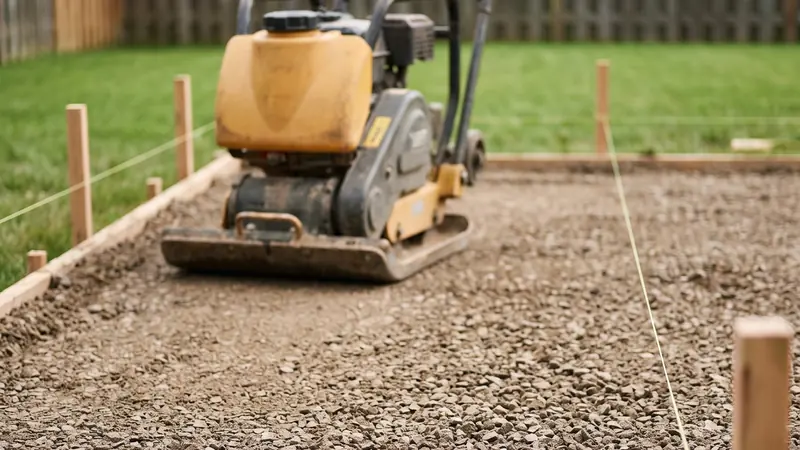
- Compact the base in a 4 inch layer of road base or crushed stone.
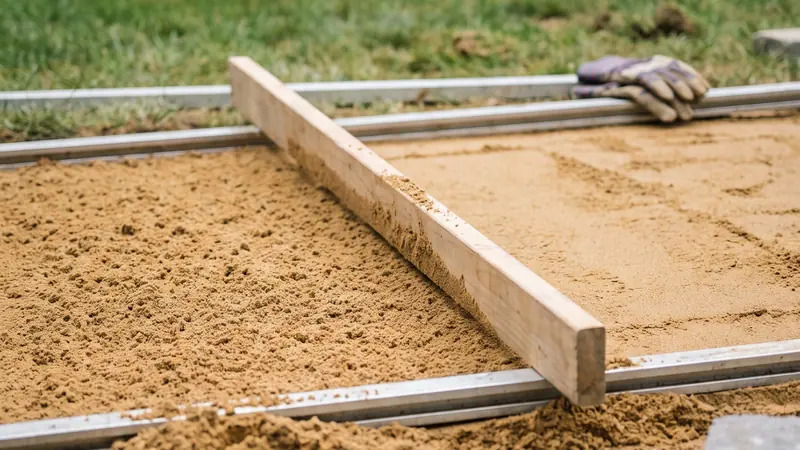
- Screed the bedding sand about 1 inch deep.
- Set the stones with even joint spacing and fit the cut pieces last.
- Fill the joints with sand, decomposed granite, pea gravel or polymeric sand.
Flagstone patio or stepping stones?
For a full patio surface, flagstone laid tight is the usual choice, and the flagstone calculator gives the tonnage. For a path across a lawn or bed you do not need full coverage. Stepping stones set with planted gaps use far less stone, and you size them by counting steps instead of covering an area.
Flagstone cost
Price depends on the stone, the region and the delivery, so the flagstone calculator does not guess it. Enter the price per ton from your yard and it multiplies by the tons you need. Square-cut stone is priced per square foot instead. Add the base, sand and edge restraints to get the full project cost.
Common flagstone ordering mistakes
- Using one coverage for every stone. A ton of thin stone covers far more than a ton of thick stone.
- Forgetting waste. Cut pieces and breakage add up to about 10% of the order.
- Ordering the stone only. The base, bedding sand and joint material are separate orders.
- Thin stone on sand. It can crack under load. Match the thickness to how you set it.
Setting the stone on a gravel base? Work out the base tons.
Paver base calculatorBefore you order flagstone
Measure the patio, pick the thickness, and let the flagstone calculator give you tons and pallets with 10% extra. Confirm the coverage per ton with your yard, then order the base, bedding sand and joint fill along with the stone. Keep the flagstone calculator PDF to compare quotes.
Frequently asked questions
How much does a ton of flagstone cover?
It depends on thickness. Acme Sand & Gravel's figures: thin 1¼ inch minus stone covers about 140 to 160 sq ft per ton, regular 1¾ inch minus about 115 to 125 sq ft, and 2 inch heavy stone about 80 to 90 sq ft. Earth Stone Rock quotes 80 to 120 sq ft per ton for patio flagstone.
How many square feet is a pallet of flagstone?
A pallet of flagging from Acme weighs about 3,500 lb (1.75 tons), so it covers roughly 140 to 280 sq ft depending on thickness. Pallet weights vary by quarry.
What thickness of flagstone should I use?
Acme suggests about 1¾ inch stone when setting it on sand, and 1¼ inch stone when setting it in a concrete base. Thicker stone is sturdier on sand and for heavier use.
How much extra flagstone should I order?
About 10 percent for cuts and breakage, according to Earth Stone Rock and Select Stone Supply. Irregular stone gets cut to fit, and the occasional piece breaks in transport.
Is flagstone sold by the ton or by the square foot?
Random flagstone is sold by the ton, and coverage depends on thickness. Square-cut flagstone is sold by the square foot, so you order the patio area plus waste, as Select Stone Supply explains.
How much base goes under a flagstone patio?
For a dry-laid patio, Earth Stone Rock plans about 4 inches of compacted base and 1 inch of bedding sand. That is roughly 1.2 cubic yards of base and 0.3 cubic yards of sand per 100 sq ft. Hardscape Genius puts patio base at 4 to 6 inches.
Is the flagstone calculator accurate for irregular patios?
Yes, if you enter the total area and pick the right thickness. Split odd shapes into rectangles, add them up, and use the coverage per ton your yard quotes. Wide joints stretch the stone a little further than tight ones.
Sources