On this page
How much paver sand do I need?
Bedding sand goes down 1 inch thick, so the math is area × 1 in ÷ 12 ÷ 27 = cubic yards, then about 1.35 tons per yard for dry sand. Add a little for screeding waste.
A 12 × 16 ft patio needs 16 cu ft = 0.59 yd³: about 0.8 tons of dry sand, or 36 bags of 50 lb once you add 10% for screeding waste.
How to use the paver sand calculator
Four inputs, and every step shows in "How we calculated this" and in the PDF report.
Step 1: Enter the patio or walkway size
Length and width in feet, or the square feet. Use the same area as the pavers; the sand stops at the edge restraints. The depth of the sand layer is fixed; the crushed stone base under it is a separate material.
Step 2: Keep the 1 inch layer in the paver sand calculator
ICPI Tech Spec 2 calls for an uncompacted nominal 1 inch. The 1.5 inch option is there for uneven screed rails, not to fix a low base.
Step 3: Choose dry or wet sand
Sand is sold by weight, and wet sand weighs about 20% more for the same volume. Pick the condition your supplier delivers so the tons match.
Step 4: Add waste and prices
The default adds 10% for screeding. Enter the bag and bulk prices to see which is cheaper.
What sand to use under pavers
- Type: concrete sand (ASTM C33), coarse, washed and generally sharp, per ICPI.
- Not: masonry sand, limestone screenings or stone dust. ICPI says they do not compact uniformly and can block drainage in the bedding layer.
- Thickness: screeded to an uncompacted nominal 1 inch.
- Condition: never frozen or saturated when it goes down.
ICPI's bedding sand gradation (ASTM C33 with a tighter limit on fines):
| Sieve | % passing |
|---|---|
| ⅜ in (9.5 mm) | 100 |
| No. 4 (4.75 mm) | 95–100 |
| No. 8 (2.36 mm) | 80–100 |
| No. 16 (1.18 mm) | 50–85 |
| No. 30 (0.6 mm) | 25–60 |
| No. 50 (0.3 mm) | 5–30 |
| No. 100 (0.15 mm) | 0–10 |
| No. 200 (0.075 mm) | 0–1 |
Bedding sand, joint sand and polymeric sand
| Sand | Where it goes | Spec |
|---|---|---|
| Bedding sand | 1 in layer under the pavers | Concrete sand, ASTM C33 |
| Joint sand | Swept into the joints after compaction | ASTM C144, or bedding sand |
| Polymeric sand | Joints, hardens when wetted | Manufacturer's product |
Joints are only 1/16 to 3/16 in wide, so joint sand is a small quantity. The polymeric sand calculator works it out from the paver size and joint width.
Paver sand by patio size
| Patio (sq ft) | Cubic yards (1 in) | Tons (dry) | 50 lb bags |
|---|---|---|---|
| 100 | 0.31 | 0.42 | 17 |
| 250 | 0.77 | 1.04 | 42 |
| 500 | 1.54 | 2.08 | 84 |
| 1,000 | 3.09 | 4.17 | 167 |
| 2,000 | 6.17 | 8.33 | 334 |
Screeding the sand
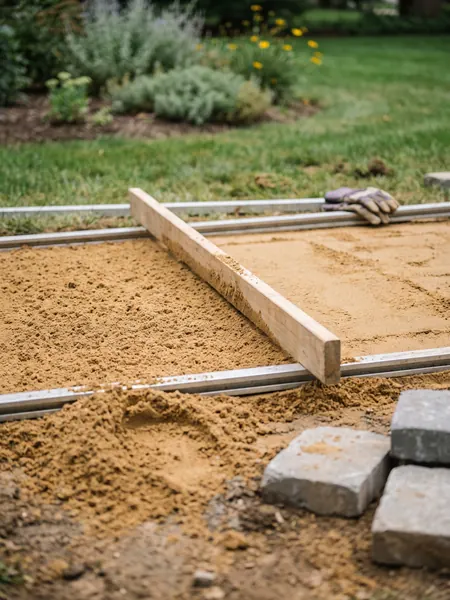
Lay two screed rails (1 in pipes or the tops of the edge restraints) on the compacted base, fill between them, and pull a straight board across to strike the sand off level. Do not walk on it once screeded, and spread only a little ahead of the pavers.
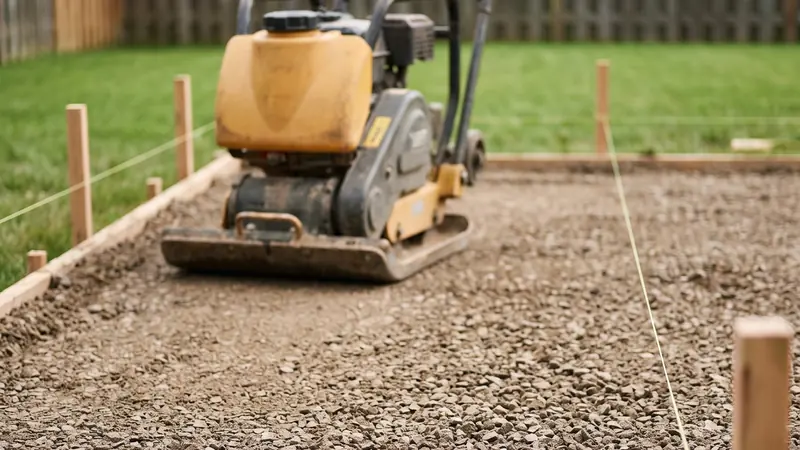
After the pavers are laid, a plate compactor seats them and pushes some sand up into the bottom of the joints; ICPI asks for at least two passes before the joint sand goes in.
Sand is not the base
The load sits on the compacted gravel base, 4 in under patios and 6 in under driveways per ICPI. Work it out with the paver base calculator, or get pavers, base and sand at once with the paver calculator.
Dry vs wet sand
The Calculator Site lists dry sand at about 2,700 lb (1.35 tons) per cubic yard and wet sand at about 3,240 lb (1.62 tons). If your supplier sells by the ton and the pile is wet, you get less volume, so choose "wet" in the calculator.
Bags or bulk sand
A 50 lb bag is 1/40 of a ton. A small walkway takes a few bags; a patio past about half a ton is cheaper in bulk. Keep bulk sand covered with a tarp so it stays dry until you screed it.
Before you order paver sand
Enter the patio size, keep the 1 inch layer, pick dry or wet sand and a little extra, and the paver sand calculator gives the tons, cubic yards and bags of concrete sand to buy. Ask for ASTM C33 sand by name, and download the PDF report to take to your supplier.
Frequently asked questions
How much sand do I need under pavers?
Enough for a 1 inch layer: ICPI Tech Spec 2 says bedding sand should be screeded to an uncompacted nominal 1 inch. That's 3.1 cubic yards per 1,000 sq ft, about 4.2 tons of dry sand.
What kind of sand goes under pavers?
Concrete sand meeting ASTM C33, per ICPI: coarse, washed, with sharp particles. Masonry sand, limestone screenings and stone dust should not be used for the bedding layer.
How many bags of sand for a 10×10 patio?
100 sq ft at 1 inch is 8.3 cubic feet, 0.31 yd³, about 0.42 tons of dry sand: 17 bags of 50 lb, or 19 with 10% extra for screeding.
Is paver sand the same as polymeric sand?
No. Bedding sand goes under the pavers. Polymeric sand, or ASTM C144 joint sand, is swept into the joints between them after they are laid and compacted. See the polymeric sand calculator.
Can I use sand to level the base?
No. ICPI says uneven areas in the base must be fixed before the sand goes down; unevenness in the sand shows through the pavers over time.
How much does a cubic yard of sand weigh?
About 2,700 lb (1.35 tons) dry and 3,240 lb (1.62 tons) wet, according to The Calculator Site. Suppliers weigh it as delivered, so wet sand gives you less volume per ton.
Sources