On this page
- How many pavers do I need?
- How to use the paver calculator
- Common paver sizes and pavers per square foot
- Laying patterns and waste
- What goes under pavers
- How deep to dig for pavers
- Paver patio installation, step by step
- Buying pavers by the pallet
- Paver cost per square foot
- Paver driveways vs patios
- Edge restraints
- Common paver project mistakes
- Before you order pavers
- Frequently asked questions
How many pavers do I need?
Divide the area of the patio by the area of one paver, then add extra for cuts. The paver calculator also works out the base gravel and bedding sand that go underneath, so you get the whole project in one list.
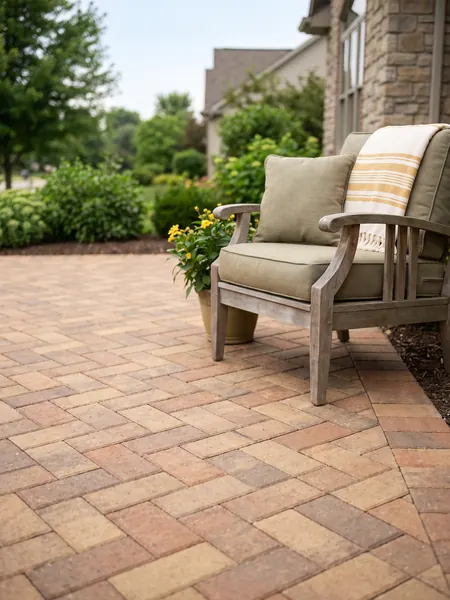
Worked example: a 12 × 10 ft patio is 120 sq ft, or 17,280 square inches. With 4 × 8 in pavers (32 sq in each) that is 540 pavers, or 594 with 10% extra. Under them go about 2.1 tons of base gravel at 4 inches and 0.5 tons of bedding sand at 1 inch.
How to use the paver calculator
Four steps, each shown in "How we calculated this" and in the PDF report you can hand to a supplier or a client.
Step 1: Enter the project area in the paver calculator
Type the length and width of the patio, walkway or driveway in feet, or the square feet if you know them. For curves and L-shapes, measure the pieces in the square footage calculator and send the total here.
Step 2: Pick the paver size and the waste allowance
Choose a common size of patio pavers or enter a custom one in inches. Then pick 5, 10 or 15% extra for cuts and breakage, depending on the pattern and the number of edges you will cut as you install them.
Step 3: Choose the base depth
4 inches for patios and walkways, 6 inches for driveways, 8 inches for poor drainage, following ICPI Tech Spec 2. The paver calculator turns it into tons of base gravel, plus tons of bedding sand for the 1 inch layer.
Step 4: Add prices for the total cost
Enter the price per paver, per ton of base and per ton of sand. The result shows each line and the project total for materials, and the edge restraint length for a rectangle.
Common paver sizes and pavers per square foot
The number of pavers needed per square foot = 144 ÷ the paver's area in square inches. Many "4 × 8" pavers are made in metric sizes, so the manufacturer's count per square foot is the one to trust.
| Paver size | Area | Pavers per sq ft | Pavers per 100 sq ft |
|---|---|---|---|
| 4 × 8 in (brick paver) | 32 sq in | 4.50 | 450 |
| 100 × 200 mm (metric "4 × 8") | 31 sq in | 4.65 | 465 |
| 6 × 6 in | 36 sq in | 4.00 | 400 |
| 6 × 9 in | 54 sq in | 2.67 | 267 |
| 12 × 12 in | 144 sq in | 1.00 | 100 |
| 16 × 16 in | 256 sq in | 0.56 | 57 |
| 12 × 24 in | 288 sq in | 0.50 | 50 |
Laying patterns and waste
The pattern changes how many pavers you cut, not how many cover the area. Running bond (offset rows) and stack bond have the fewest cuts; basketweave is similar. Herringbone at 45 or 90 degrees interlocks best, and ICPI recommends it for streets, but it leaves a cut at nearly every edge paver.
That is why the paver calculator lets you set the allowance: 5% for a square patio in running bond against a house, 10% for most projects, 15% for herringbone, circles and curved borders.
What goes under pavers
An interlocking concrete paver surface is a stack of layers over compacted soil. ICPI Tech Spec 2 sets these minimums over well-drained soils; colder climates and wet or weak soils need a base 2 to 4 inches thicker.
| Layer | Patio or walkway | Residential driveway |
|---|---|---|
| Compacted aggregate base | 4 in minimum | 6 in minimum |
| Bedding sand (concrete sand, ASTM C33) | 1 in nominal, uncompacted | 1 in nominal, uncompacted |
| Concrete pavers | 2⅜ in (60 mm) | 2⅜ in (60 mm) |
| Joint sand (ASTM C144 or polymeric) | Fills the 1/16 to 3/16 in joints | Fills the 1/16 to 3/16 in joints |
ICPI calls for 3⅛ in (80 mm) pavers only for streets and industrial pavements. The paver base calculator and the paver sand calculator go deeper on each layer, with compaction and bags.
Clay or wet ground needs more base
The ICPI numbers assume soil that drains. On clay or low, soggy spots, plan a thicker base, consider a geotextile under it, and slope the surface away from the house.
How deep to dig for pavers
Add the base, the sand and the paver thickness. For a patio: 4 + 1 + 2⅜ = about 7⅜ inches below the finished surface. For a driveway: 6 + 1 + 2⅜ = about 9⅜ inches. Add the extra base for clay or cold climates.
ICPI recommends a slope of at least 1.5% for drainage, about 3/16 in per foot, away from buildings. Set string lines and grade stakes before you dig, and call 811 so buried utilities are marked.
Paver patio installation, step by step
- Lay out and excavate to the depth above, a little wider than the patio so the edge restraint sits on base.
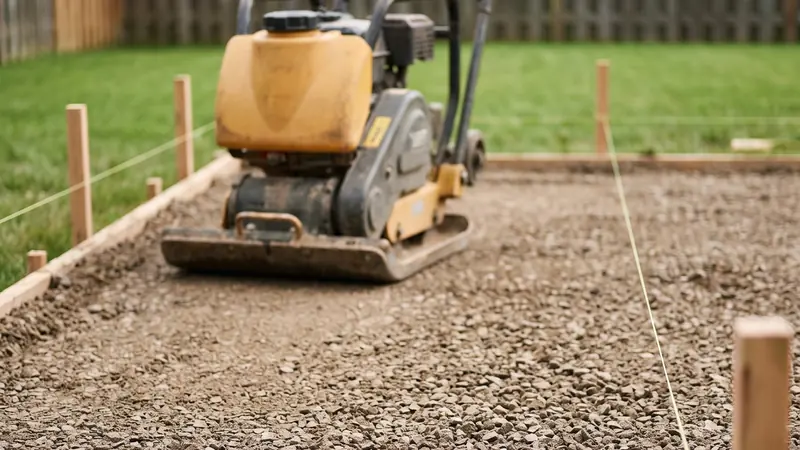
- Compact the soil with a plate compactor and remove roots, soft spots and standing water.
- Spread and compact the base in 4 to 6 in lifts; ICPI asks for 98% of standard Proctor density for patios and driveways.
- Set the edge restraints (plastic, aluminum, steel or concrete) with at least 1 in of contact on the paver's side.
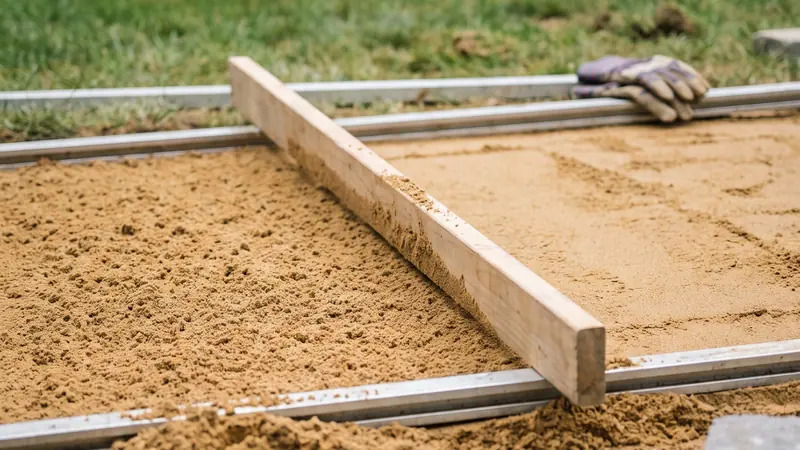
- Screed the bedding sand to 1 in over the base; never use it to fill dips in the base.
- Lay the pavers from several bundles to blend the colors, keeping joints 1/16 to 3/16 in.
- Cut the edges with a saw or splitter; fill any gap over 3/8 in with a cut paver.
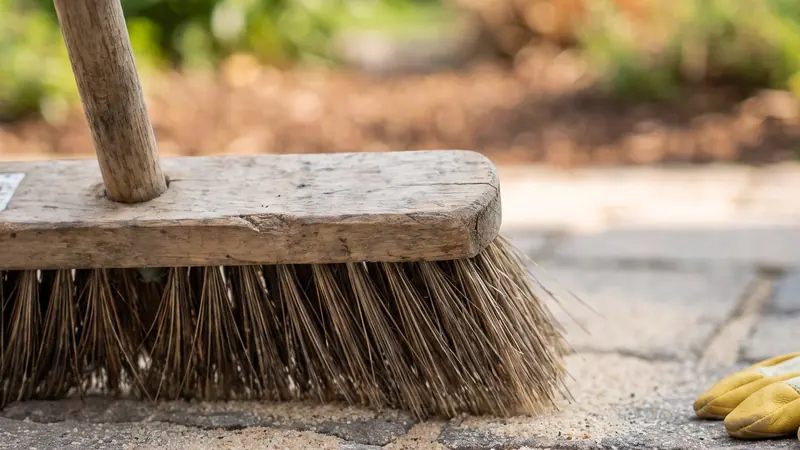
- Compact, then sweep joint sand in and compact again until the joints are full.
Buying pavers by the pallet
Pavers are sold by the piece, by the square foot or by the pallet. Pallet coverage depends on the manufacturer and the paver, so check the label: square feet to buy ÷ square feet per pallet, rounded up. Take pavers from 3 or 4 bundles at a time, as ICPI advises, so small color differences blend.
Paver cost per square foot
Materials cost = pavers × price per paver + base tons × price per ton + sand tons × price per ton. Pavers per square foot × price per paver gives the paver cost per square foot: 4.5 pavers at $0.75 is $3.38 per sq ft before base, sand, edging and labor.
Prices vary by region, brand and color, so the paver calculator never guesses them. Enter your supplier's prices and download the report for your estimate or your client's quote.
Paver driveways vs patios
A paver driveway uses the same 2⅜ in pavers as a patio but a thicker base, 6 in minimum over well-drained soil per ICPI, compacted harder. Choose a herringbone pattern, which resists the turning and braking of tires best, and a solid edge restraint.
Edge restraints
Pavers need a restraint on every open edge or they creep apart. In length × width mode the paver calculator gives the perimeter, which is the most you'd need. Subtract any side that runs along a house wall, steps or an existing slab.
Common paver project mistakes
- Too thin a base. It is the base, not the pavers, that carries the load.
- Leveling with sand. ICPI says uneven base must be fixed before the sand goes down.
- Masonry sand or stone dust for bedding. Use concrete sand.
- No slope. Water pools and freezes; slope at least 1.5% away from the house.
- Ordering with no extra. Cuts and breakage always eat pavers.
Before you order pavers
Measure the area, pick the paver size, the waste allowance and the base depth, and let the paver calculator turn them into pavers, tons of base and sand, and the total cost. Check the per-square-foot count on the manufacturer's sheet, and download the PDF report to take to your supplier.
Frequently asked questions
How many pavers do I need?
Divide the area in square inches by the area of one paver, then add extra for cuts. A 12 × 10 ft patio is 17,280 sq in; with 4 × 8 in pavers (32 sq in) that is 540 pavers, or 594 with 10% extra.
How many pavers per square foot?
144 divided by the paver's area in square inches: 4.5 for 4 × 8 in pavers, 4 for 6 × 6 in, 2.67 for 6 × 9 in and 1 for 12 × 12 in. Metric pavers of 100 × 200 mm give about 4.65 per square foot.
How thick should the base be under pavers?
ICPI Tech Spec 2 calls for at least 4 inches of compacted aggregate base under patios, sidewalks and pedestrian areas, and at least 6 inches under residential driveways, over well-drained soil. Cold climates and wet or weak soils need 2 to 4 inches more.
How much sand goes under pavers?
A 1 inch layer: ICPI says bedding sand should be screeded to an uncompacted nominal 1 inch, using concrete sand (ASTM C33), not masonry sand or stone dust. That is about 0.31 cubic yards per 100 sq ft.
How many extra pavers should I buy?
The paver calculator lets you add 5, 10 or 15%. Straight running bond with few cuts needs the least; herringbone and curved edges need the most. Leftovers are handy for future repairs.
How deep should I dig for a paver patio?
Add the layers: 4 in of base, 1 in of sand and a 2⅜ in paver is about 7⅜ in for a patio. A driveway with a 6 in base needs about 9⅜ in. Dig deeper on clay or wet ground.
How many pavers are on a pallet?
It depends on the manufacturer and the paver size. The pallet label or product sheet gives the square feet per pallet: divide your square feet to buy by that number and round up.
Sources