On this page
- How much polymeric sand do I need?
- How to use the polymeric sand calculator
- Joint width and depth
- Polymeric sand coverage per bag
- Polymeric sand vs regular sand
- How to install polymeric sand
- Weather and timing
- Common polymeric sand mistakes
- Color, sealer and how long polymeric sand lasts
- Polymeric sand cost
- Before you order polymeric sand
- Frequently asked questions
How much polymeric sand do I need?
Polymeric sand only fills the joints, so the amount depends on the paver size, the joint width and the paver thickness, not just the patio area. A 200 sq ft patio of 6 × 9 inch pavers with 1/8 inch joints needs about 3 bags of 50 lb.
The joint share is 1 − (L × W) ÷ ((L + joint) × (W + joint)). For 6 × 9 inch pavers with 1/8 inch joints that's about 3.4% of the surface. A 200 sq ft patio of 2⅜ inch pavers holds 1.3 cu ft of joint sand: 3 bags of 50 lb with 10% extra.
Polymeric sand, also called jointing sand, is a fine sand blended with polymers. You sweep it into the joints between pavers and wet it. The water activates the binder and the sand hardens into a firm, flexible joint.
How to use the polymeric sand calculator
The polymeric sand calculator works out the joint volume from your paver dimensions, then converts it to pounds and bags. The "How we calculated this" panel shows each step, and the PDF report keeps them for your supplier or client.
Step 1: Enter the paved area
Type the length and width of the patio, path or driveway. For curves or several zones, add up each area in the square footage calculator first and enter the total.
Step 2: Choose the paver size and joint width
Pick a standard paver size or enter your own, then set the joint width and paver thickness. Measure a few joints with a tape and use the average, because the widths are rarely uniform.
Step 3: Set the bag size and price
Most polymeric sand comes in 50 lb bags, but some brands sell 25 or 35 lb. Enter your bag weight and price to get the bag count and the total cost.
Joint width and depth
ICPI Tech Spec 2: joints between pavers should be consistent, between 1/16 and 3/16 inch (2 to 5 mm). Natural stone and tumbled pavers often have wider joints.
Depth matters as much as width. Polymeric Sand Store says most manufacturers require at least about 1 inch of joint depth, and many recommend 1½ inches. Shallow joints are a common reason for cracking and washout.
Polymeric sand coverage per bag
Coverage is not a property of the sand alone. It depends on how much joint your paving has. A 4 × 8 inch paver has more than twice the joint length per square foot of a 24 × 24 inch slab.
Inch Calculator says a 50 lb bag usually covers 75 to 100 sq ft with small gaps and 30 to 60 sq ft with gaps of 1/4 to 3/8 inch. It puts irregular flagstone joints at 8 to 10 sq ft per bag.
The chart below is our joint-volume result: joints filled full depth on 2⅜ inch pavers, sand at about 100 lb per cubic foot (dry sand, 2,700 lb per cubic yard), 10% extra.
| Paver | 1/16 in joint | 1/8 in joint | 3/16 in joint | 1/4 in joint |
|---|---|---|---|---|
| 4 × 8 in | 1.0 | 2.0 | 2.9 | 3.8 |
| 6 × 6 in | 0.9 | 1.8 | 2.6 | 3.4 |
| 6 × 9 in | 0.7 | 1.5 | 2.2 | 2.9 |
| 12 × 12 in | 0.5 | 0.9 | 1.3 | 1.8 |
| 16 × 16 in | 0.3 | 0.7 | 1.0 | 1.3 |
Bags of 50 lb per 100 sq ft.
Check the bag chart
Polymeric sand brands publish their own coverage charts, and their sand isn't all the same weight. Use this estimate to plan, then round to the chart on the bag you buy.
Polymeric sand vs regular sand
| Polymeric sand | Regular jointing sand | |
|---|---|---|
| Sets hard | Yes, after watering | No, stays loose |
| Washes out in rain | Resists it once cured | Washes out over time |
| Weeds and ants | Greatly reduced | Both find a way in |
| Installation | Dry joints, precise watering | Sweep and compact |
| Cost | Higher per bag | Lower per bag |
Regular sand still has a job as bedding sand under the pavers. Polymeric sand is for the joints on top. See the paver sand calculator for the bedding layer.
How to install polymeric sand
Follow the bag first, because each formula has its own watering steps. The steps below come from Techniseal's HP NextGel installation guide and Polymeric Sand Store.
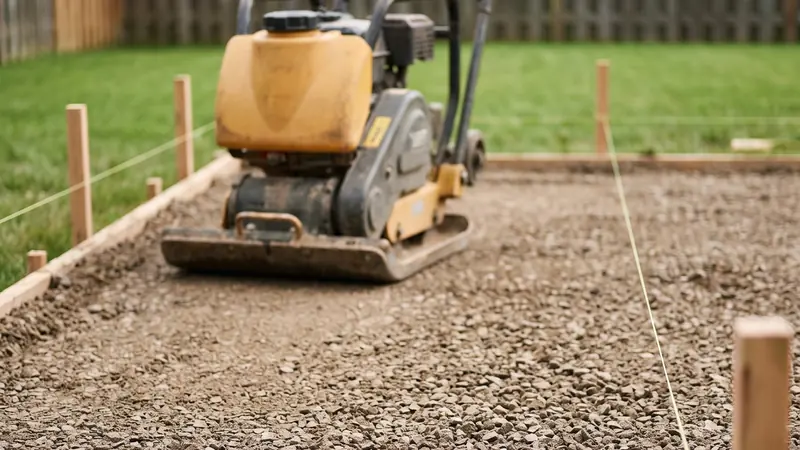
- Prepare. Pavers must be dry, clean and compacted on a gravel base with edge restraints in place. Run a plate compactor over the surface so the joints are tight and the pavers are locked.
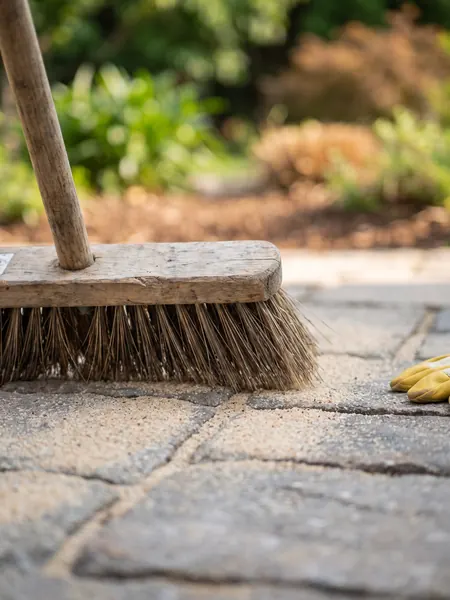
- Fill. Sweep the sand in with a stiff broom until the joints are full. Leave the sand at least 1/8 inch below the top of the pavers, or at the bottom of the chamfer.
- Clean. Blow every grain off the paver surface. Sand left on top turns into haze when it gets wet.
- Water. Use a shower setting. Techniseal wets a 200 sq ft section for 30 seconds, then again for 30 seconds until the joints are saturated. Stop when water pools on the surface.
- Cure. Keep vehicles off for the time on the bag: 48 to 72 hours for HP NextGel, and 24 to 72 hours for most brands.
Weather and timing
Polymeric Sand Store recommends installing when pavers and air are above freezing and rising, ideally 50 °F or warmer, with dry weather before and after. Rain before the joints cure can wash the binder out and stain the pavers.
Common polymeric sand mistakes
- Joints too shallow. Remove old material until you reach the depth on the bag.
- Too much water. Soaking the joints washes out the binder. Water in short stages.
- Sand on the pavers. Blow the surface clean before you water, or it leaves haze.
- Wrong product. Wide joints, porcelain pavers and permeable paving each need a formula made for them.
Color, sealer and how long polymeric sand lasts
Polymeric Sand Store puts properly installed joints at around 8 to 12 years or more, depending on joint depth, drainage, traffic and freeze and thaw cycles. Driveways need touch-ups sooner than patios.
Pick a color for contrast: grays and tans blend in, darker sand frames each paver. Order samples first, because color looks different in sunlight. If you plan to seal the hardscape, ask the manufacturer when to do it.
Polymeric sand cost
The price depends on the brand, the joint width rating and the formula. Wide joint and specialty products cost more than standard sand. Enter your price per bag and the calculator adds up the project cost.
Still need the sand that goes under the pavers? That's bedding sand.
Paver sand calculatorBefore you order polymeric sand
Measure the paver size and a few joints, let the polymeric sand calculator turn them into pounds and bags, then round up and keep a spare bag for touch-ups. Check the depth, the coverage and the weather window on the bag you buy.
Frequently asked questions
How much polymeric sand do I need per square foot?
It depends on the paver size and joint width more than the area. Small pavers with wide joints use far more sand than large slabs with tight joints. Enter both and the calculator works out the joint volume.
How many bags of polymeric sand for 100 sq ft?
For 6 × 9 inch pavers, 2⅜ inches thick, with 1/8 inch joints: about 74 lb, or 1.5 bags of 50 lb, per 100 sq ft with 10% waste. Wider joints or smaller pavers need more. Always compare with the coverage chart on your bag.
How wide should paver joints be?
ICPI Tech Spec 2 says joints between concrete pavers should be consistent and between 1/16 and 3/16 inch (2 to 5 mm). Most pavers have spacer bars that set this width.
How accurate is the polymeric sand calculator?
It is an estimate built on your paver size, joint width and paver thickness, with 10% extra. Joints vary across a real patio, so measure a few spots, use the average and round up to a whole bag.
How long does polymeric sand take to cure?
Joints usually set within a few hours. Polymeric Sand Store says most brands ask for 24 hours before foot traffic and 24 to 72 hours before vehicles, with at least 24 hours of dry weather after watering. Techniseal asks for 48 to 72 hours for HP NextGel.
Can I put polymeric sand over old sand?
Not directly. The binder will not bond to loose sand underneath, so it cracks or sinks. Remove the old joint material to the depth on the bag, keep the joints dry and clean, then fill them full depth.
Will polymeric sand stop weeds and ants?
It greatly reduces both. Hardened joints leave little room for ants to tunnel or for seeds to root. Seeds that land on top of the joint can still sprout, so some maintenance is normal.
Sources
- ICPI Tech Spec 2: Construction of Interlocking Concrete Pavements (PDF)
- The Calculator Site: How Much Does a Cubic Yard Weigh?
- Techniseal: HP NextGel Polymeric Paver Sand, Step-by-Step Installation
- Inch Calculator: Polymeric Sand Calculator
- Polymeric Sand Store: Polymeric Sand Calculator and coverage guide